Can a Baby Sleep in a Stroller? Carrycot, Lie-Flat Seat and Car Seat Compared
A nap on a walk is fine to supervise. A stroller is still not a sleep surface, and which part of it your baby is lying in changes the answer.
- Editor, gear and the arithmetic of a small home
- Sep 28, 2026
- 14 min read
In this guide
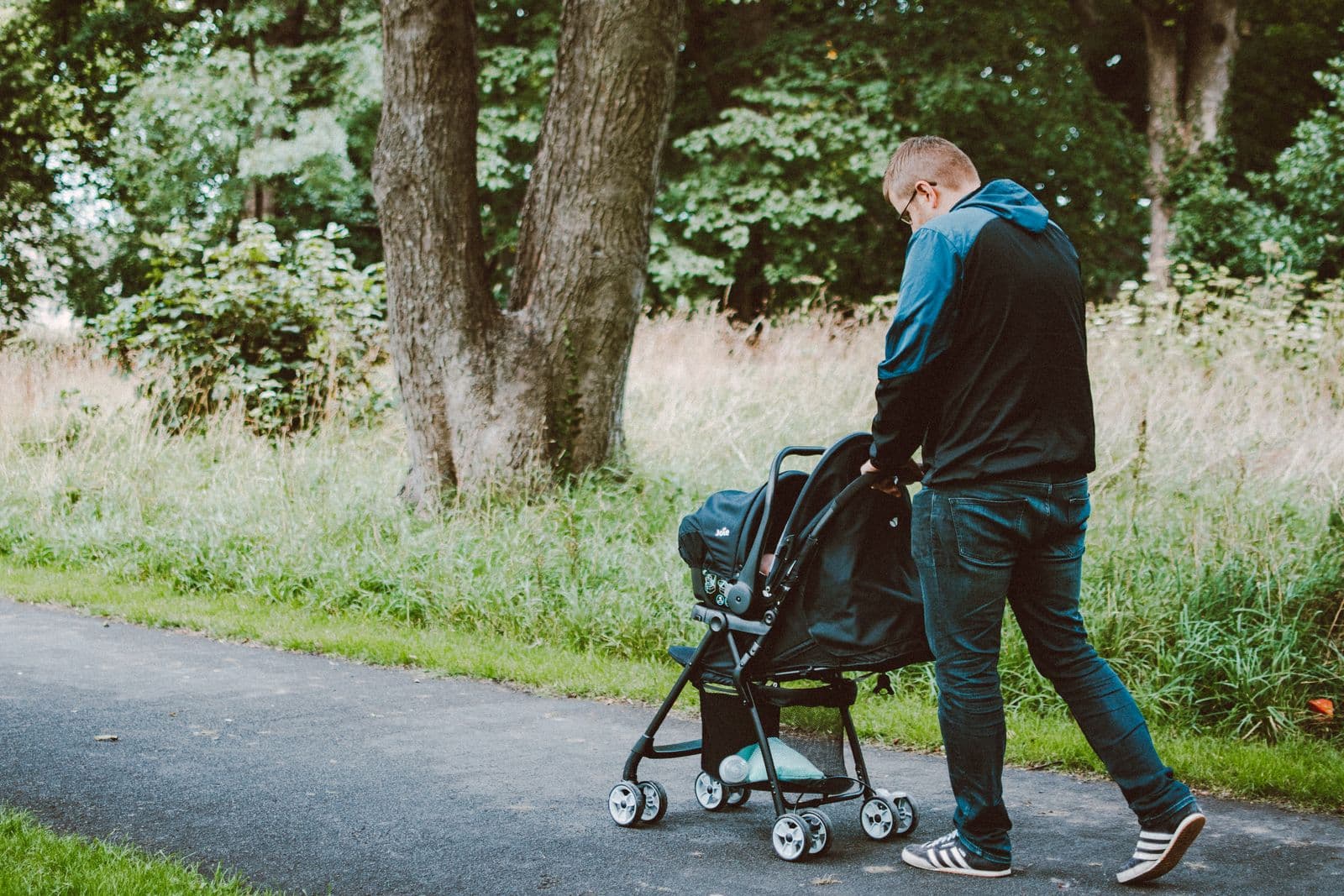
Babies fall asleep in strollers. The motion, the white noise of wheels on pavement and the steady light under a canopy are close to a guaranteed nap for a lot of newborns, and no guide is going to change that. The useful question is not whether it happens but what to do once it has, and the answer depends on which of the four things clipped to your frame the baby is actually lying in.
Here is the short version. The American Academy of Pediatrics and the Consumer Product Safety Commission both say the same thing in almost the same words: if a baby falls asleep in a car seat, stroller, swing, carrier or sling, move them to a firm, flat sleep surface as soon as you can. A stroller nap that you are walking beside and watching is a supervised nap in a transport product. It is not a place to leave a baby to sleep, and the federal standard a stroller is built to does not pretend otherwise.
Four positions, four different answers
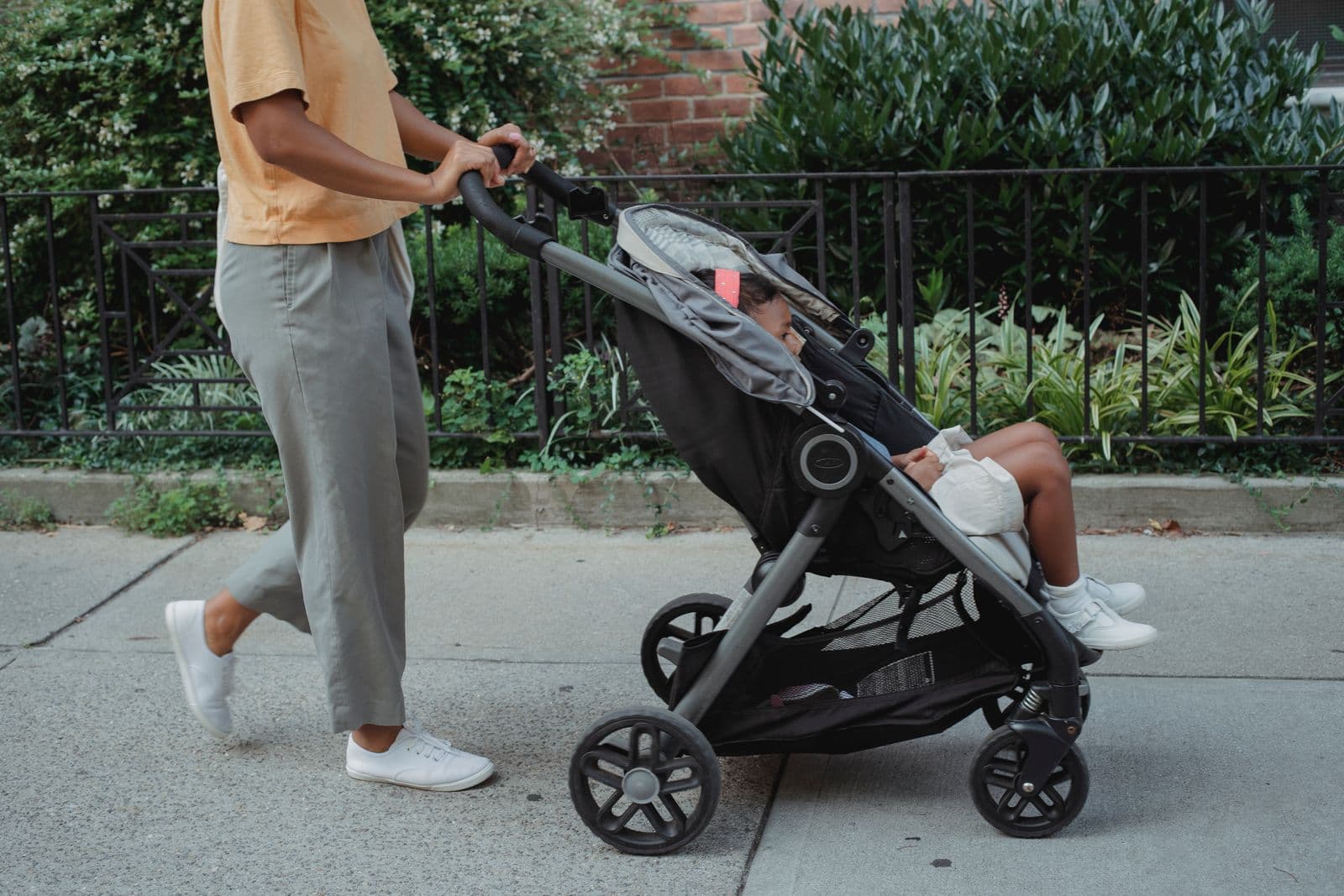
An upright or partly reclined toddler seat. This is the worst of the four for a sleeping young baby. The CPSC's own safe sleep guidance names the problem directly: a seated or semi-reclined position can cause a baby's head to tip forward and their airway to be blocked. A baby who cannot yet hold their head steady has no way to correct that. If a young baby dozes off sitting up, recline the seat fully if the stroller allows it, and plan to move them.
A seat that reclines fully flat. Many full-size strollers advertise a lie-flat recline for newborns. It is a real improvement on a semi-upright seat, but check the manual for the exact age and weight the flat recline is rated from, because not every "near-flat" recline is flat, and the manufacturer's minimum is an operating limit rather than a suggestion. A reclined seat with a hammock-style fabric base will also sag under a baby, which is the opposite of firm.
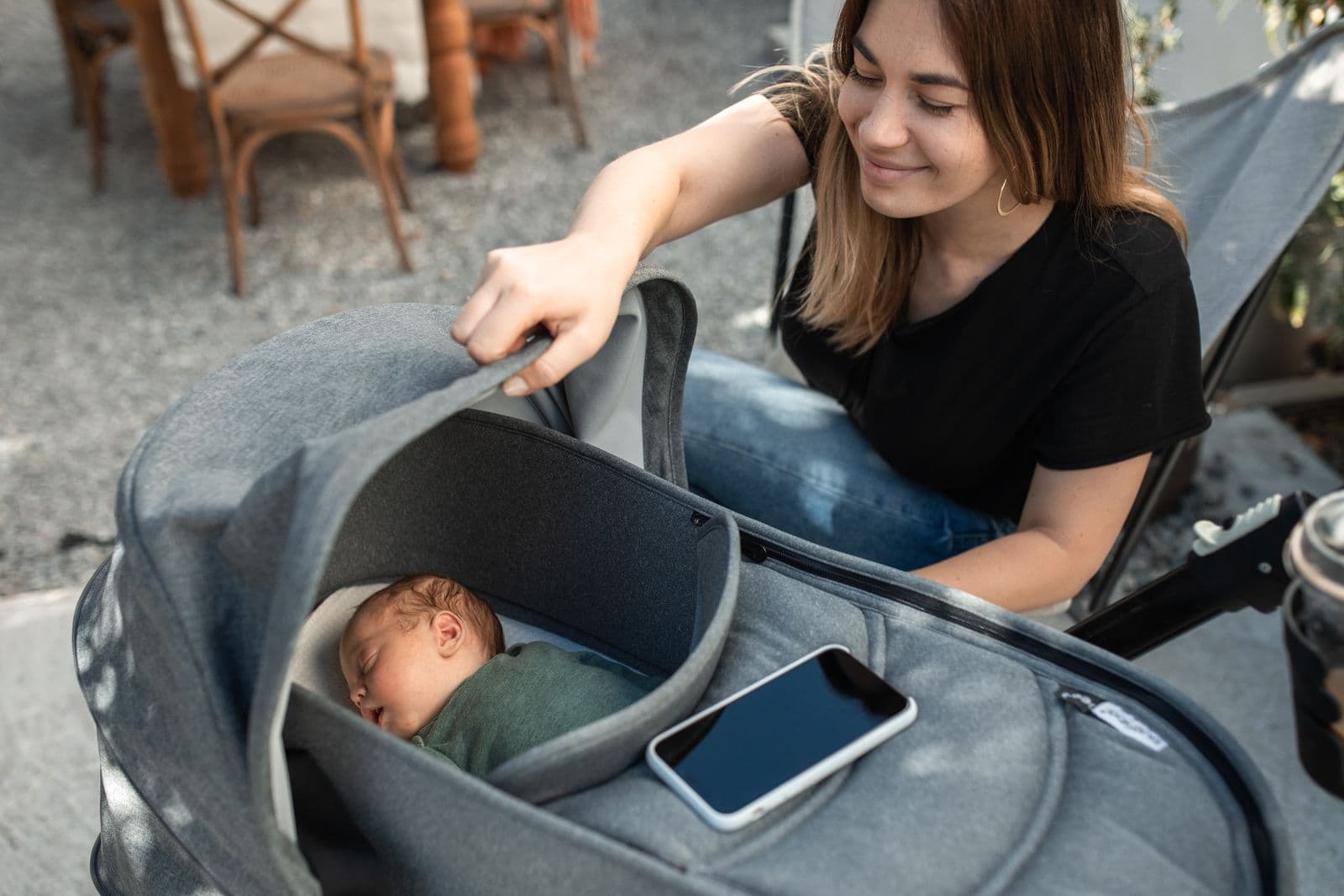
A carrycot or pram bassinet. This is the closest thing on a stroller to a sleep surface: a rigid-sided shell with a flat mattress that the baby lies in on their back. For a newborn on a long walk, it is the right attachment, and it is the one part of a pram system that some brands market for overnight sleep when it is mounted on a separate stand. That claim is specific, and the section on carrycots below explains what it does and does not cover.
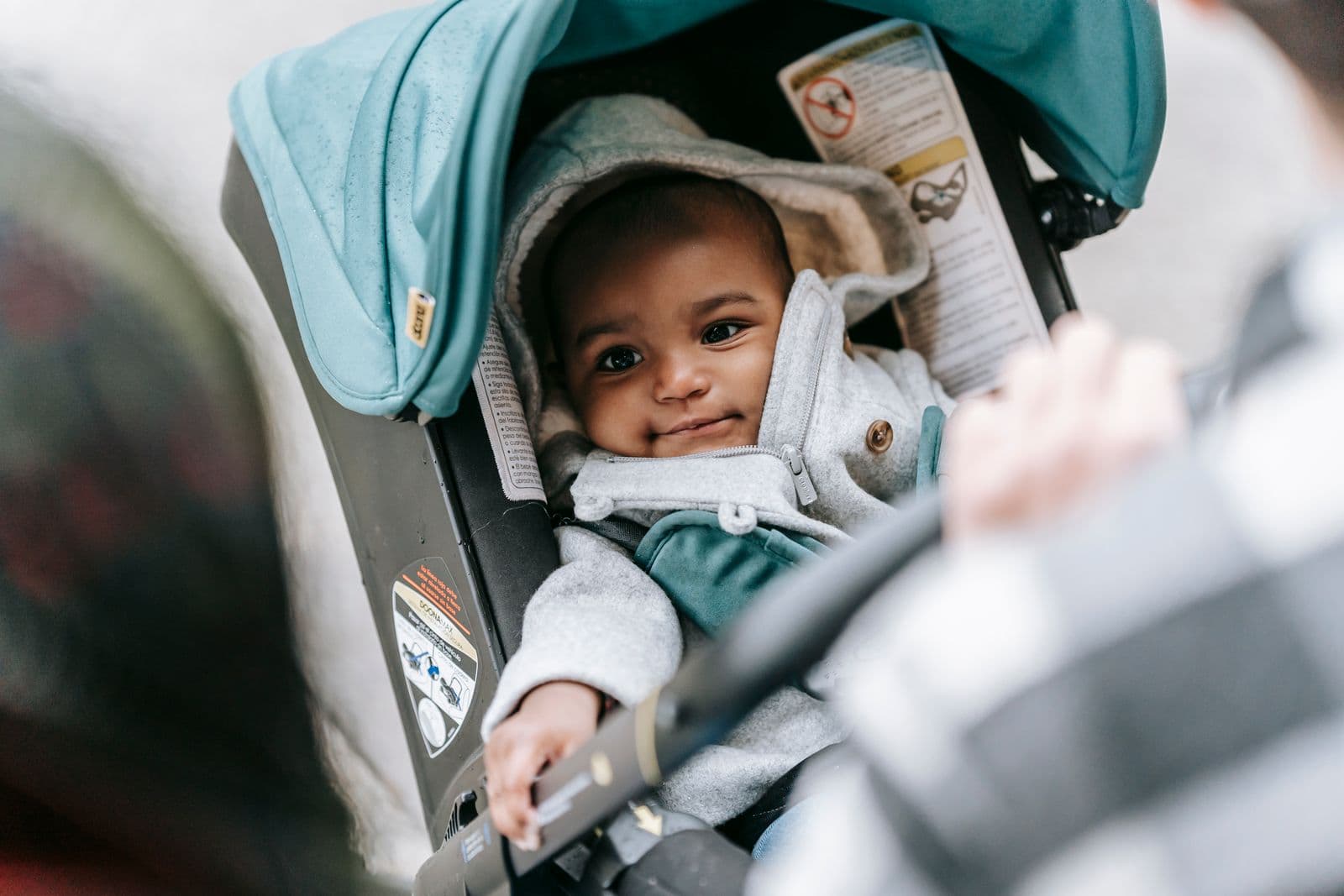
An infant car seat clicked onto the frame. This is how most travel systems carry a newborn, and it is convenient for exactly the reason it is risky for sleep: the baby stays in the same semi-reclined shell from car to pavement and back again. It is a car seat, built to protect a baby in a crash, and the evidence below is clear that sleeping in one outside the car is where most of the harm in this whole category happens.
What the federal standards actually cover
Every stroller and pram sold in the United States has to meet ASTM F833-21, the consumer safety specification for carriages and strollers, which the CPSC made mandatory at 16 CFR Part 1227. That standard is about transport: the frame, the locking mechanisms and the structural failure points the category has produced over the years. The standards written for sleep are separate, and a stroller that meets F833 has passed tests for being pushed, not for being slept in unattended.
Sleep products have their own rules. Bassinets and cradles are made to ASTM F2194-25, mandatory at 16 CFR Part 1218. Anything else marketed or intended to give an infant up to 5 months old a place to sleep, and not already covered by the crib, bassinet, play yard or bedside sleeper standards, falls under the Infant Sleep Products rule at 16 CFR Part 1236. The rule names sleep surfaces angled more than 10 degrees from horizontal among the hazards it addresses, and it caps the sleep surface angle at 10 degrees from horizontal and requires those products to meet the bassinet standard itself. The CPSC's consumer guidance puts the same line more plainly: inclined products with an angle greater than 10 degrees should never be used for infant sleep.
The practical reading is simple. If a product was made and labelled only as a stroller, carrycot or car seat, nothing on the label says it is a place to leave a baby asleep. If a brand says a carrycot is suitable for overnight sleep, it is making a claim about a specific configuration, usually with a specific stand, and that claim is worth reading in full rather than stretching to cover the pram on the pavement. The separate federal law that took inclined sleepers off the market altogether is set out in what the Safe Sleep for Babies Act banned.
What the death review data says
The study most often cited on this question is Liaw, Moon, Han and Colvin, published in Pediatrics in 2019. The authors reviewed 11,779 sleep-related infant deaths recorded between 2004 and 2014 in the National Center for Fatality Review and Prevention data. Of those, 348, or 3.0%, happened in sitting devices such as car seats, strollers, swings and bouncers.
Three findings from that paper matter for anyone pushing a pram:
- Car seats dominated. 62.9% of the sitting-device deaths were in car safety seats, and in those cases the seat was being used as directed less than 10% of the time. More than half of the car seat deaths happened at the child's home, not in a vehicle.
- Strollers were a small share. The University of Virginia's release on the study reports that strollers accounted for 7 of the 348 deaths, about 2%. Small is not zero, and the pattern across the whole group applies to them too.
- Supervision changed the odds. Deaths in sitting devices had higher odds of happening when a child care provider or a babysitter, rather than a parent, was supervising. Most of the deaths were associated with at least one additional risk factor, and more than half with two or more.
The authors' conclusion is narrow and useful: using a car seat for sleep outside of travel may pose a risk to the infant. Rachel Moon, one of the authors and the lead author of the AAP's safe sleep policy, summarised it in the university's release: car seats are important when travelling, but it is best not to have the infant sleep in the car seat at home, and the safest place for a baby to sleep is a firm, flat surface.
That is the reason the travel-system question is not only about price and fold. If you are choosing between a bundle and buying pieces separately, travel system or buying separately covers the trade-offs, and the sleep point from this section is a real argument for budgeting a carrycot on top of the seat.
The infant car seat on a frame
An infant seat on a stroller is still a car seat. It holds the baby semi-reclined, which is the correct angle for crash protection in a vehicle and the wrong one for unsupervised sleep. Two habits make it work:
- Keep the harness done up properly. A car seat's protection depends on a snug harness, and a loosened harness on a sleeping baby lets them slump. Do not loosen it to make a nap more comfortable.
- Treat the seat as transport, not a crib. When the walk ends, lift the baby out and put them down on a flat surface if they are going to keep sleeping. Carrying the whole seat indoors and leaving it on the floor is exactly the at-home use the Liaw paper describes.
Carrycots: the closest thing to a bassinet, and where it stops
A carrycot gives a newborn what the other attachments cannot: a flat, firm surface to lie on their back. On a long walk that is the best place for a young baby to be, awake or asleep, and a lot of families find it is the attachment they wish they had bought first.
Some brands go further and market their carrycot for overnight sleep. UPPAbaby, for example, says its Bassinet V3 can be an overnight sleep solution with the addition of its separate Bassinet Stand accessory, and rates the bassinet from birth to 20 pounds or until the infant can push up on hands and knees, whichever comes first. Read those words carefully. The overnight claim is tied to the stand, and the limit is whichever milestone comes first, not the later of the two.
Four rules keep a carrycot in the safe category:
- Use the mattress it came with, and nothing else. No extra padding, no pillow, no folded blanket underneath. "Bare is best," in the CPSC's phrase, applies to a carrycot as much as to a crib: nothing but the fitted sheet the manufacturer supplies.
- Stop at the limit. Once a baby can push up on hands and knees, or reaches the weight limit, the carrycot is done even if they still fit lengthways.
- Do not improvise a stand. A carrycot on a table, bed or pair of chairs is not the configuration the manufacturer specifies, and it can fall.
- Stay within sight. A supervised nap in a carrycot on a walk is one thing. Parking the pram in a hallway and leaving the room is another.
If you are deciding between a carrycot and a proper bassinet or crib for the house, the certified sleep options are compared in the best cribs and bassinets.
Blankets, canopies and heat
Two of the recommendations in the AAP's 2022 safe sleep policy statement apply directly to a pram: avoid soft bedding, and avoid overheating. The pram versions of those rules are specific.
Do not drape a blanket over the stroller. It is the most common shade trick and one of the least safe. Children's Hospital of Orange County's pediatric guidance says a blanket over a stroller blocks the breeze and traps heat, and can push the temperature inside past 100 degrees in 30 minutes. It also blocks your view of the baby, which is the thing that makes a stroller nap acceptable in the first place. Use the stroller's own canopy, point the opening away from the sun and keep air moving.
Check every 10 to 15 minutes in warm weather. The same guidance lists the signs of overheating to look for: flushed skin, fast breathing, sweaty hair and extra fussiness. If you see them, get into shade or somewhere cooler.
Loose blankets inside are soft bedding. The CPSC's list of things to keep out of a baby's sleep space starts with pillows and blankets, and names weighted blankets separately. In the cold, dress the baby in layers or use a footmuff made for that stroller.
Supervision, and the harness
A stroller nap is safe to the degree someone is watching it. The CPSC is explicit on this: do not leave a baby unsupervised in products that are not designed for safe sleeping, and a stroller is one of those products.
The harness matters for the same reason. In 2023 the CPSC and Baby Trend warned owners of Sit N' Stand Double and Ultra strollers (model numbers beginning SS76 or SS66) about head and neck entrapment between the pivoting front canopy and the armrest or seat back. The hazard arises when a child in the front seat is not secured with all five points of the harness, or when a child who is not riding climbs on the outside of the stroller. One reported death was of a 14-month-old who was not riding in the stroller. The mitigation the CPSC published is to remove and store the canopy when it is not in use, keep children from playing on the stroller, and always use the full five-point harness.
The warning covers one model, but the lesson applies to every frame: a sleeping child slides, and a harness done up properly stops them sliding into a gap.
A routine that works for walk naps
For most families the realistic plan looks like this:
- Newborn to roughly 5 or 6 months: walk with the carrycot where you can. If the baby is in an infant car seat on the frame and falls asleep, that is fine while you are walking and watching, but when you stop, move them to a flat surface.
- Once the baby moves to the toddler seat: recline it as far as the manual allows for a nap, keep the harness done up, and keep the canopy up and the blanket off.
- When you get home: the nap ends in the stroller and continues, if it continues, in a crib, bassinet or play yard. Leaving a baby asleep in a parked pram in a hallway is the scenario the evidence warns about.
- For runs: a jogging frame is a different question entirely, with its own manufacturer age limits, covered in when can a baby ride in a jogging stroller.
If you are still choosing the frame itself, the ranked picks, including which ones take a carrycot, are in the best strollers.
Sources
- American Academy of Pediatrics, Sleep-Related Infant Deaths: Updated 2022 Recommendations (Moon, Carlin, Hand), Pediatrics, 2022, 150(1), e2022057990, PubMed abstract
- Liaw, Moon, Han, Colvin, Infant Deaths in Sitting Devices, Pediatrics, 2019, 144(1), e20182576, PubMed abstract
- UVA Health, Infant death review highlights danger of misusing car seats
- HealthyChildren.org (AAP), Safe Sleep: 9 Ways to Reduce a Baby's Risk
- CPSC, Safe Sleep: Cribs and Infant Products
- CPSC and Baby Trend warning, Sit N' Stand canopy entrapment hazard (2023)
- eCFR, 16 CFR Part 1227, Safety Standard for Carriages and Strollers
- eCFR, 16 CFR Part 1218, Safety Standard for Bassinets and Cradles
- eCFR, 16 CFR Part 1236, Safety Standard for Infant Sleep Products
- UPPAbaby, Bassinet V3 product page
- CHOC Health Hub, Stroller safety: keeping your baby cool on hot summer days
Questions people actually ask
Is it safe for a baby to nap in a stroller?
A supervised nap while you are walking is common and reasonable. The AAP and CPSC both advise moving a baby who has fallen asleep in a stroller, car seat or carrier to a firm, flat surface as soon as you can, and never leaving a baby asleep in a stroller unsupervised.
Can a newborn sleep in a pram bassinet overnight?
Only if the manufacturer says that specific carrycot is suitable for overnight sleep, and only in the configuration it names. UPPAbaby, for example, ties the overnight claim for its Bassinet V3 to its separate Bassinet Stand, with a limit of 20 pounds or pushing up on hands and knees, whichever comes first.
How long can a baby stay asleep in a car seat on a stroller?
The AAP and CPSC guidance does not set a number of minutes. It says to move the baby to a flat surface as soon as practical once you are out of the car or have stopped walking. The 2019 Pediatrics study found most sitting-device deaths were in car seats used outside of travel.
Can I cover the stroller with a muslin or blanket for shade?
No. A blanket over the stroller blocks airflow and traps heat, and pediatric guidance from Children's Hospital of Orange County says it can push the temperature inside past 100 degrees in 30 minutes. Use the stroller's canopy and keep air moving.
As an Amazon Associate we earn from qualifying purchases. We earn a commission on some links, at no extra cost to you. It never changes which products we recommend or the order they appear in. Full disclosure
Who wrote this
Editor, gear and the arithmetic of a small home
Marisa Okonkwo edits BabyGearSearch and writes the hardware half of it: strollers, car seats, carriers and the furniture around them. She reads the specification sheet, the fit list and the returns policy in full before she reads a single review, because the difference between two apparently identical strollers is almost always a number one of them declines to publish.
More from MarisaThe standard
How this guide was built
- Manufacturer specification sheets and warranty terms, read in full rather than summarised from a listing.
- The federal safety standard the product is certified to, plus anything NHTSA, the AAP or the CPSC has published on it.
- Owner reports at volume, including the one-star reviews, which is where failure modes live.
- Every price checked against the live listing on the date printed beside it.