Sippy Cup, Straw Cup or Open Cup: What the Guidance Actually Asks For
The AAP and CDC name all three cups at six months, and set two deadlines that matter more than the cup: the bottle by 18 months, the sippy by about two.
- Writer, standards and the recall record
- Oct 5, 2026
- 15 min read
In this guide
- What the AAP and CDC actually say about timing
- Why the bottle deadline is the one that matters
- What goes in the cup at each age
- The three formats, and who each one is wrong for
- What the cup is made of, and what the recall record shows
- Falls cause more cup injuries than defects
- Moving off the bottle, step by step
- A short buying list
- Sources
The cup aisle sells three formats as rungs on a ladder: spouted sippy, then straw, then open cup. The guidance does not read that way. The American Academy of Pediatrics and the CDC both name all three at the same age, around six months, and neither ranks one above the others for a beginner.
What the guidance does set is two deadlines, and they matter more than the cup you start with. The AAP asks for the move off the bottle to be finished sometime between 12 and 18 months. And it says sippy cups should be used only while a child is learning, with drinking from an open cup by about two years of age. Every buying decision in this category is really a decision about how to hit those two dates.
What the AAP and CDC actually say about timing
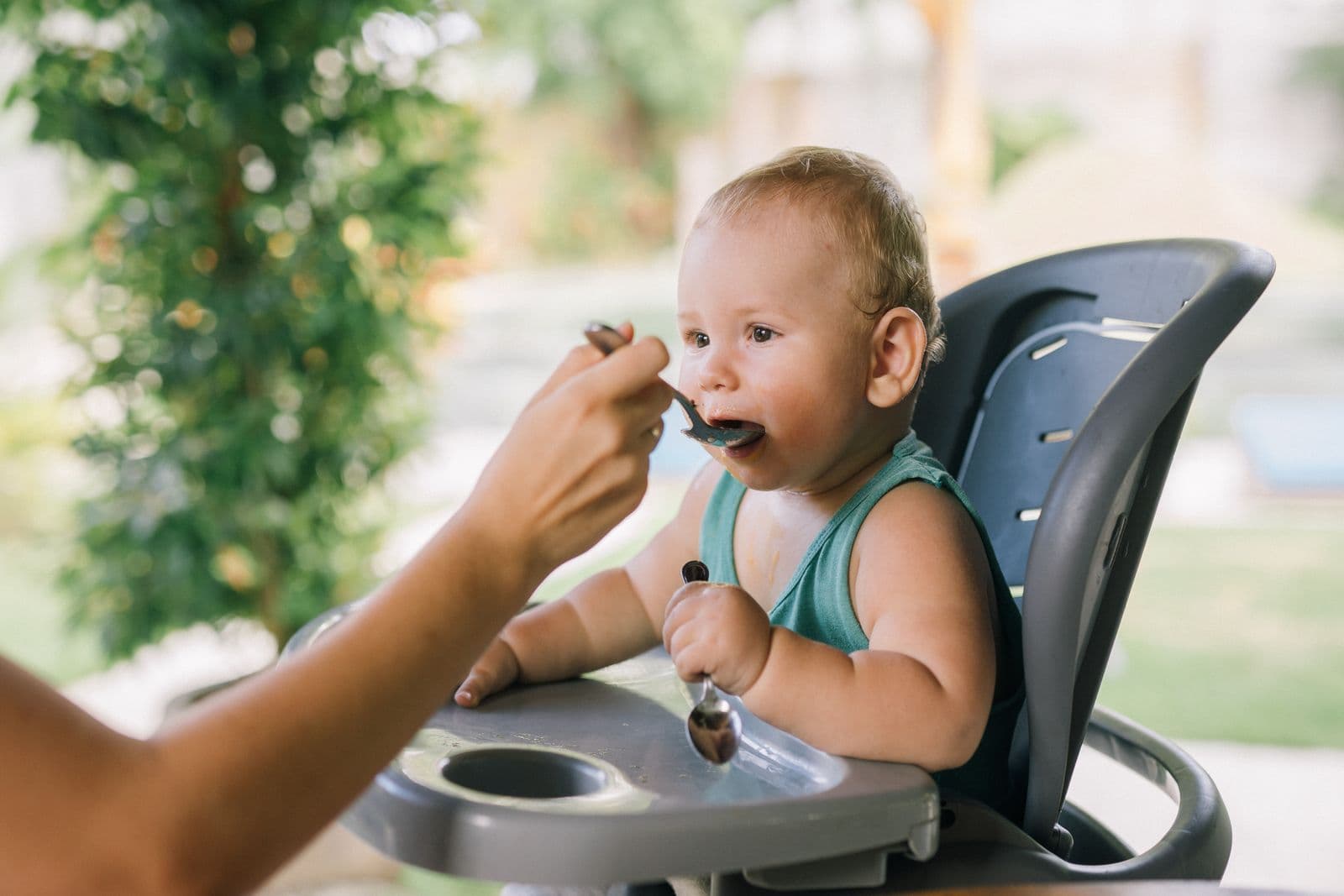
The AAP's parent site, HealthyChildren.org, covers the transition in From Bottle to Cup, written by Jennifer Shu, MD, FAAP. It recommends offering a cup when a baby starts eating solid foods, usually around six months. It names the options plainly: a "sippy" or training cup with a spouted lid, a cup and straw, or an open cup without a straw, which it calls "just fine, too." The bottle feedings then come down slowly, with the transition finished between 12 and 18 months.
The CDC's page on fingers, spoons, forks and cups gives the same starting point and adds two developmental markers that are useful when choosing a cup:
- Around 6 months: a spouted sippy cup or a cup and straw can be offered, as solids begin.
- Around 9 months: children can start learning to use a cup without a lid.
- Around 12 months: children can drink from a cup without a lid while an adult holds it.
So a lidded cup is a reasonable first tool, an open cup is the destination, and open-cup practice can start at nine months rather than waiting for the sippy to be outgrown. The AAP adds one exception. A child with a chronic illness, physical differences or signs of a small motor skill delay should have a schedule built with the pediatrician, around that child's abilities.
Why the bottle deadline is the one that matters
The AAP's page lists four problems linked to prolonged bottle feeding:
- Skipped meals. Toddlers who sip bottles all day often are not hungry at mealtimes.
- Excess weight. Bottles can turn into high-calorie snacks.
- Cavities. Early childhood caries, sometimes called baby bottle tooth decay, happen when teeth are constantly bathed in milk, formula, juice or other drinks. The page adds that children still drinking from bottles well into their second year may also have tooth alignment problems and even speech delays.
- More resistance. The longer it goes, the harder toddlers cling to the bottle.
A spill-proof cup carried around all day, filled with milk or juice, recreates most of what the bottle deadline exists to end. The AAP's tips say to offer cups mainly at mealtime, because little ones who carry cups around like security blankets may drink far too much. When a toddler is thirsty between meals, offer a little plain water, then set the cup aside.
What goes in the cup at each age
The AAP's companion page, Recommended Drinks for Children Age 5 and Younger, by Natalie D. Muth, MD, MPH, RDN, FAAP, sets out amounts drawn from a Healthy Eating Research report that the AAP supports along with the American Heart Association, the Academy of Nutrition and Dietetics and the American Academy of Pediatric Dentistry.
- 6 to 12 months: water at 4 to 8 ounces a day (half a cup to one cup), offered in an open, sippy or strawed cup. No cow's milk to drink. The page notes this water is unlikely to replace much breast milk or formula.
- 12 to 24 months: water at 8 to 32 ounces a day, and whole cow's milk at 16 ounces a day (2 cups).
- 2 to 5 years: water at 8 to 40 ounces a day, and nonfat or low-fat milk at 16 to 24 ounces a day.
The same page says infants under one year should not drink juice at all. It describes toddler milks as unnecessary for most children, and it advises avoiding drinks with added sugars, stevia or artificial sweeteners, and caffeine.
For the sippy cup specifically, the bottle-to-cup page is stricter still: when a child is using a sippy cup, fill it only with plain fluoridated water, without juice or sugar. For the first attempts, it suggests putting formula or breast milk in the cup, since that can feel more natural than water.
The three formats, and who each one is wrong for
Spouted sippy cup
The spill-proof spout is the selling point and the weakness, because a cup that cannot spill is easy to hand over and forget. A spouted cup is wrong for a household where the cup tends to travel with the child between meals, and wrong as a long-term answer once a child is past the age the AAP gives for open-cup drinking.
Where it earns its place is as a first lidded cup at six months, and for drinks away from the table, such as in a stroller or car, where an open cup is not practical. If you buy one, look for a valve that comes out completely. The CDC's cleaning guidance for infant feeding items starts by separating all bottle parts, valves included, before anything is washed. The same logic carries to a cup, and a valve that does not detach cannot be cleaned that way. The same hygiene logic is laid out for bottles in do you need a bottle sterilizer.
Inspect the spout as well as the valve. In 2007 CVS/pharmacy, in cooperation with the CPSC, recalled about 84,000 Playskool Toddler "NoSpill" Sippy Cups because young children could chew through the plastic spout. The firm had 36 reports of toddlers chewing through it, including one choking incident and three near-choking incidents. A spout that is split, torn or chewed thin goes in the bin.
Straw cup
The AAP and the CDC both list a cup and straw as a six-month option, alongside the spouted lid. A straw cup is wrong for anyone who will not clean the straw properly, because a straw is a narrow tube that milk residue coats from the inside. It needs a straw brush, and the straw and any valve need to come out of the lid so each part can be washed on its own, the same take-it-apart rule the CDC applies to bottle nipples and valves.
Some straw cups also carry a spill-proof valve, which brings back the carry-around problem of the spouted cup. If the plan is a cup that stays at the table, a straw cup without a valve does the job without encouraging all-day sipping.
Open cup
An open cup is wrong for one situation only: as the sole cup for a baby under nine months who is expected to manage it alone. The CDC places learning to use a lidless cup at around nine months and drinking from one, held by an adult, at around twelve. Before that, an open cup works only with an adult holding it.
It is the format the AAP sets as the goal by about two, it has no valve or straw to clean, and a cup that spills is naturally a mealtime cup. Expect mess. The CDC says to be ready for spills, and the AAP suggests that as a child gets the hang of it, a small open cup kept next to the bathroom sink or water dispenser lets them practice serving themselves.
What the cup is made of, and what the recall record shows
Plastic. The BPA question in this category is older than most parents assume. In July 2012 the FDA amended its food additive regulations to no longer provide for BPA-based polycarbonate resins in baby bottles and sippy cups. The FDA's page on BPA in food contact applications is careful about why: it granted petitions showing those uses had been abandoned by industry, which is a different finding from a safety ruling. A "BPA-free" label on a sippy cup describes the market, not a feature one brand has over another.
Plastic can still break. The CPSC recall of about 43,500 Next Step plastic sippy and tumbler cups, distributed by Mead Johnson Nutritionals as a promotional giveaway, followed 90 reports of cups breaking into pieces or handles breaking off when dropped or banged, with six reports of minor cuts to fingers and thumbs. A cracked cup is retired, whatever it cost.
Lead in decorations. The federal limit is set out on the CPSC's Total Lead Content page. Under Section 101 of the Consumer Product Safety Improvement Act, a children's product with more than 100 ppm lead in an accessible component is a banned hazardous substance. Decorated grips are where that rule has bitten. In October 2020 Porter World Trade recalled about 9,700 Ron Jon Surf Shop sippy cups because the plastic characters on the cups contained lead above the ban and a regulated phthalate above the federal limit. They were sold at surf shops and an airport store, a reminder that a souvenir cup is still a children's product.
Double-walled stainless steel. This is the material with the clearest recent recall pattern, and in both recalls below the hazard sat in the same place, a solder dot on the base. In November 2022 Green Sprouts recalled about 10,500 stainless steel straw bottles, sippy cups and sip and straw cups because the bottom base could break off and expose a solder dot containing lead. The firm had seven reports of bases breaking off and no injuries. In November 2023 the CPSC announced a recall of about 84,000 Tiblue double-walled stainless steel children's cups, sold on Amazon from August 2021 through July 2023, whose accessible solder bead exceeded the lead ban and whose lids could crack into sharp edges and small parts. The CPSC notes the seller was uncooperative and urges owners to dispose of the cups.
That record makes the base, not the material, the place to look. A steel cup whose bottom cap is loose, dented or missing, or that shows a bare metal dot, comes out of use. Before buying any cup, and especially an unbranded one from a marketplace seller, search the brand in the CPSC recall database.
Falls cause more cup injuries than defects
The most useful number in this category is not about a material. A study in Pediatrics by Keim and colleagues, using the National Electronic Injury Surveillance System, estimated that 45,398 children under three were treated in US emergency departments from 1991 to 2010 for injuries associated with a bottle, pacifier or sippy cup, an average of 2,270 a year. Sippy cups accounted for 14.3 percent. The most common mechanism, at 86.1 percent of injuries, was a fall while using the product. Lacerations were the most common diagnosis at 70.4 percent, the mouth was the most often injured body region at 71.0 percent, and one-year-olds were injured most often. Product malfunction was relatively uncommon, at 4.4 percent of cases.
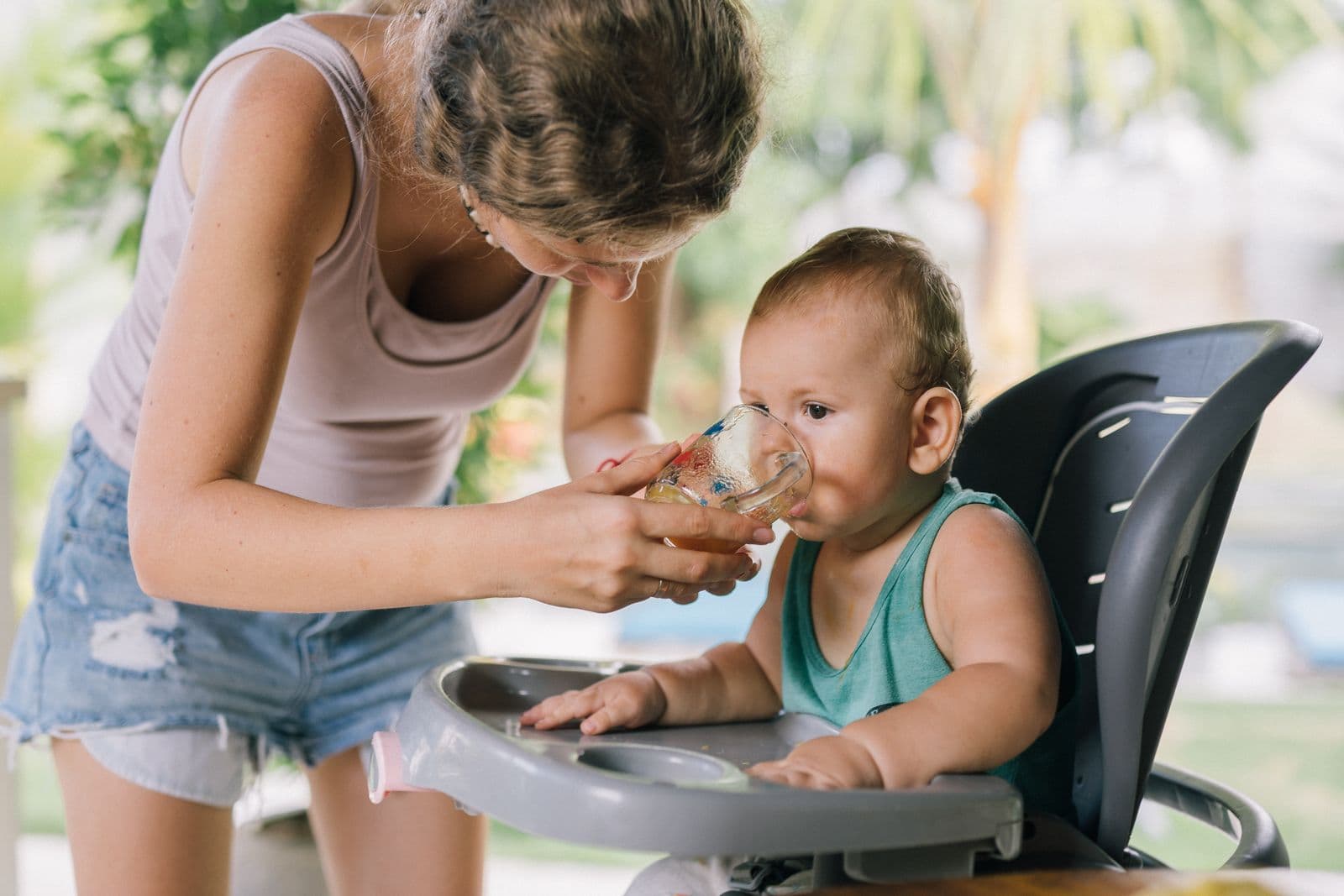
The authors called for more awareness of the AAP's cup recommendations, and the practical rule follows. Drinks happen sitting down, at the table or in the high chair, rather than on the move with a spout in the mouth. A high chair with a harness and a footrest is part of the drinking setup as much as the eating one, and the measurements that decide which chair fits a room are in the high chair that fits a small kitchen.
Moving off the bottle, step by step
The AAP's bottle-to-cup page gives a sequence rather than a single cut-off day:
- Offer a cup from around six months at meals, with the plate, starting with whatever the baby already drinks.
- Keep bottles to mealtimes at first, and gradually drop the others, especially at naps and bedtime, with extra cuddles or stories in their place.
- Swap what is in the bottle. Plain water in bottles between meals, then plain water in a sippy cup or cup, helps the switch.
- Get every caregiver on the same routine, including daycare, sitters and grandparents.
- Do not give in at bedtime. The page warns that temporary sleep problems can turn into serious struggles if a bottle is offered whenever a child protests. A pacifier may help.
A baby who refuses the bottle at five or six months is the opposite problem, and skipping the bottle for a cup is a legitimate route there, set out in bottle refusal.
A short buying list
Most households need two cups. One lidded cup, either a spouted sippy or a straw cup, covers drinks away from the table. One small open cup covers meals from the first held sips at six months and becomes the main cup over the second year. Prefer parts that come apart fully and a brand you can find in a recall search. The cup and utensil set in our feeding roundup covers the starting-solids stage in one box, and the chairs that suit a baby feeding themselves are in the best high chairs for baby-led weaning.
Questions people actually ask
When should my baby start using a cup?
The AAP recommends offering a cup when a baby starts solid foods, usually around six months. The CDC says a spouted sippy cup or a cup and straw can be offered at that age, children can start learning a lidless cup around nine months, and around twelve months they can drink from one while an adult holds it.
Is a straw cup better than a sippy cup?
Neither the AAP nor the CDC ranks one above the other. Both list a spouted sippy cup and a cup with a straw as six-month options. The AAP's goal is drinking from an open cup by about two, so either is a learning tool rather than a permanent cup.
When should the bottle go?
The AAP describes the transition as starting around six months and finishing sometime between 12 and 18 months, by dropping bottle feeds gradually, starting with those outside mealtimes and ending with naps and bedtime.
What should go in a sippy cup?
The AAP's bottle-to-cup page says to fill a sippy cup only with plain fluoridated water, without juice or sugar. Its drinks guidance suggests 4 to 8 ounces of water a day from six to twelve months, no juice before age one, and whole cow's milk from twelve months.
Are stainless steel kids' cups safe?
Steel is not the problem in itself. Several CPSC recalls involved double-walled cups whose base could break off or exposed a lead solder dot, so check the base for damage, retire any cup with a loose or missing bottom cap, and search the brand in the CPSC recall database.
Sources
- American Academy of Pediatrics, HealthyChildren.org, From Bottle to Cup: Helping Your Child Make a Healthy Transition
- American Academy of Pediatrics, HealthyChildren.org, Recommended Drinks for Children Age 5 and Younger
- CDC, Fingers, Spoons, Forks, and Cups
- CDC, How to Clean, Sanitize, and Store Infant Feeding Items
- Keim SA, Fletcher EN, TePoel MR, McKenzie LB. Injuries associated with bottles, pacifiers, and sippy cups in the United States, 1991-2010. Pediatrics, 2012, 129(6), 1104-1110
- FDA, Bisphenol A (BPA): Use in Food Contact Application
- CPSC, Total Lead Content
- CPSC, CVS/pharmacy Announces Recall of Playskool Sippy Cups
- CPSC, Next Step Plastic Sippy/Tumbler Cups Recalled for Laceration Hazard
- CPSC, Porter World Trade Recalls Ron Jon Surf Shop Sippy Cup
- CPSC, Green Sprouts Recalls Toddler's Stainless Steel Bottles and Cups Due to Lead Poisoning Hazard
- CPSC, Tiblue Stainless Steel Children's Cups Recalled Due to Violation of Federal Lead Content Ban
As an Amazon Associate we earn from qualifying purchases. We earn a commission on some links, at no extra cost to you. It never changes which products we recommend or the order they appear in. Full disclosure

Who wrote this
Writer, standards and the recall record
Dan Whitfield writes the standards side of BabyGearSearch: what a certification actually covers, what the CPSC recall database says about a brand, and what the one-star reviews agree on six months in. He is not a clinician and does not write as one. His job is to read the standard rather than the marketing page, quote the real number, and name the limit the packaging skipped.
More from DanThe standard
How this guide was built
- Manufacturer specification sheets and warranty terms, read in full rather than summarised from a listing.
- The federal safety standard the product is certified to, plus anything NHTSA, the AAP or the CPSC has published on it.
- Owner reports at volume, including the one-star reviews, which is where failure modes live.
- Every price checked against the live listing on the date printed beside it.