Measure Your Boot Before You Buy a Stroller
The most common expensive mistake in this category is a stroller that does not fit the car. Six measurements, taken in ten minutes, that decide it.
- Editor, gear and the arithmetic of a small home
- Feb 16, 2026
- Updated Jun 30, 2026
- 8 min read
In this guide
The expensive mistake in this category is not buying a bad stroller. It is buying a good one that does not fit your car, your hallway or your lift, discovering it three weeks in when returns have closed, and living with it for two years.
It is entirely avoidable, and it takes about ten minutes with a tape measure. Here is the list, in the order the decisions actually get made.
The six numbers
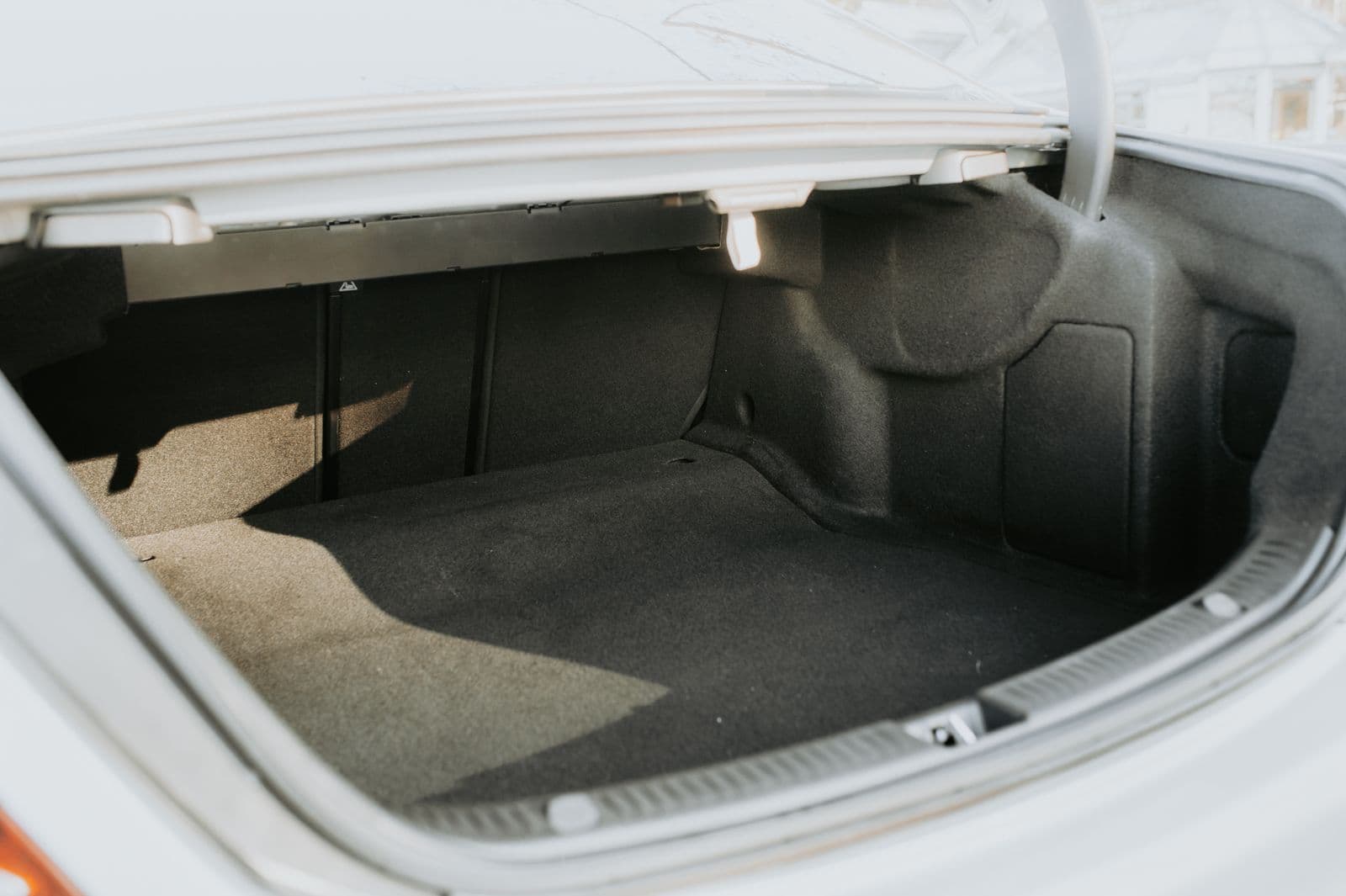
1. Boot aperture, not boot volume
Manufacturers quote boot capacity in litres, which tells you almost nothing useful here. A stroller is a rigid object and it has to pass through the opening, so the opening is the constraint.
Measure the width of the boot opening at its narrowest point, which on most hatchbacks and saloons is between the light clusters rather than at the sill. Then measure the height of the opening, from the loading lip to the underside of the parcel shelf if you intend to keep the shelf in, or to the tailgate seal if you do not.
Write both down. Compare them against the folded dimensions the manufacturer publishes, and compare all three axes rather than the one that looks closest.
2. Boot floor depth, seats up
With the rear seats in their normal position, measure from the back of the seat to the inside of the closed tailgate at floor level. This is the number that decides whether the fold goes in flat or has to be wedged diagonally, and a diagonal wedge is the thing people stop doing by week four.
If there is a spare wheel or a false floor, measure to the surface you will actually be loading onto rather than the deepest point.
3. Loading lip height
Measure from the ground to the boot sill. This one is not about whether the stroller fits, it is about whether you will be able to lift it in while holding a baby, which happens more often than anyone expects. A 12kg travel system going over a high lip on a tall SUV is a genuinely different daily experience from the same stroller going into a low estate.
Pair this with the folded weight, and be honest about who in the household will be doing it most.
4. Front door and hallway width
Measure the narrowest doorway the stroller must pass through unfolded, because that is the one that decides whether you can bring it in loaded. Standard interior doors are frequently narrower than front doors, and the tightest point in most homes is a hall doorway rather than the entrance.
Measure the hallway width at its narrowest too, especially if there is a radiator, a bannister newel or a shoe rack. A stroller that fits through a door and cannot be turned in the hall behind it has not solved anything.
5. Where it lives when it is not in use
Somewhere in the house, a folded stroller is going to stand for twenty-two hours a day. Measure that space. Under the stairs, beside the front door, in the hall cupboard. Compare it against the folded footprint and, critically, against whether the fold self-stands. A stroller that has to lean against a wall will mark that wall and fall over, and in a narrow hall it is a trip hazard.
6. The lift, if there is one
For a flat above the ground floor, measure the lift car depth and the door aperture. Then decide whether you need the stroller to fit unfolded with a baby in it, because folding a stroller in a lift while holding a baby is a task that people do once.
The seventh number, if anyone in the house is tall
Handlebar height is not a fit constraint the way a doorway is, but it is the one that produces the quiet, daily complaint. A handle set for someone 5ft 4in puts a 6ft 2in parent's hands low enough that their feet clip the rear axle on every stride. Owners call this heel strike, and it appears in reviews of otherwise well-liked frames far more often than the specification sheets would suggest.
Measure from the ground to the crease of your wrist with your arm hanging relaxed at your side. That figure, give or take an inch, is a comfortable handlebar height for you. Then check the frame's adjustment range against it, for the tallest and the shortest person who will push it. A telescoping handle with a four-inch range solves this for most households. A fixed handle solves it for whoever it was designed around.
The numbers manufacturers publish, and what they leave out
Published folded dimensions are usually accurate and usually incomplete. Three specific gaps come up repeatedly.
Folded dimensions are often quoted without the seat, or without the wheels. A frame that folds to a compact rectangle may do so only after the seat unit comes off, which means the seat is a second object to store and a second thing to carry.
Width is usually axle width, taken at the widest point. That is the right number for a doorway and the wrong one for judging the folded package, where the handlebar or the basket frame may be wider.
Weight is frequently frame-only. A frame listed at 8kg with a seat, a carrycot and a rain cover on it is not an 8kg object.
Where a brand does not publish a figure at all, that absence is itself information. The dimension a manufacturer declines to print is very rarely the flattering one.
The measurements that matter for a second child
If a second child is a realistic prospect inside three years, two more numbers matter now rather than later.
Double width. A side-by-side double is typically 29 to 33 inches across, and a standard interior door is 30 to 32 inches. This is exactly the range where it either works in your house or does not, and there is no adjusting it afterwards. A tandem is narrower and longer, which trades a doorway problem for a turning-circle problem.
Whether the frame converts. A single that accepts a second seat later is a meaningfully different purchase from one that does not, and the conversion kit is usually a significant additional cost that is worth pricing before you commit rather than after.
What to do with the numbers
Take the six measurements, write them in your phone, and treat them as a filter rather than a tiebreak. Anything that fails the boot aperture or the doorway is out, regardless of how well it reviews, because those are the two failures you cannot work around.
After that the ranking is about how the stroller behaves in your particular life, which is the argument our stroller roundup is organised around. If you are also choosing an infant car seat, settle the adapter question at the same time, because the frame and the seat are one decision rather than two, and both the car seat guide and travel system versus buying separately cover where that lands.
One more thing worth knowing before you measure anything: a great many families find that for the first few months the stroller stays in the hall and the baby travels on a body instead, which changes what you need from the frame. The trade-offs there are in the carrier guide. And if the pram bassinet is going to double as a daytime sleep space, the surface rules in the cribs and bassinets guide apply to it exactly as they do to a cot.
Questions people actually ask
Which single measurement should I take if I only take one?
The width of the boot opening at its narrowest point. It is the constraint that fails most often, it cannot be worked around, and it is the one people skip because they assume boot capacity in litres covers it.
Does a compact fold always fit in an aeroplane overhead locker?
No, and brands are careful with the wording here. Cabin-approved dimensions vary by airline and by aircraft, and a stroller marketed as cabin-sized may only qualify on some carriers. Check the specific airline's stated maximum rather than the stroller's marketing claim.
Is folded weight or folded size more important?
It depends on the loading lip. With a low boot, size decides everything and weight barely registers. With a high tailgate on a tall car, weight becomes the number you notice every single day, especially when you are lifting one-handed.
How much clearance should I leave over the published dimensions?
A couple of inches on each axis. Published figures are typically taken with the stroller at its most compact, which may mean without a rain cover fitted, without the basket contents, and with the handlebar at its lowest setting.
Do I need to measure if I am buying a second-hand frame?
More so, not less. A used purchase usually has no returns at all, and older models are often bulkier folded than current ones from the same brand. Get the model year, find that year's published dimensions rather than the current model's, and measure your car anyway.
Sources
As an Amazon Associate we earn from qualifying purchases. We earn a commission on some links, at no extra cost to you. It never changes which products we recommend or the order they appear in. Full disclosure

Who wrote this
Editor, gear and the arithmetic of a small home
Marisa Okonkwo edits BabyGearSearch and writes the hardware half of it: strollers, car seats, carriers and the furniture around them. She reads the specification sheet, the fit list and the returns policy in full before she reads a single review, because the difference between two apparently identical strollers is almost always a number one of them declines to publish.
More from MarisaThe standard
How this guide was built
- Manufacturer specification sheets and warranty terms, read in full rather than summarised from a listing.
- The federal safety standard the product is certified to, plus anything NHTSA, the AAP or the CPSC has published on it.
- Owner reports at volume, including the one-star reviews, which is where failure modes live.
- Every price checked against the live listing on the date printed beside it.