The Best Car Seats, and the Fit Problems Nobody Mentions
Six seats ranked on the things that decide whether one works for you: vehicle fit, three-across width, rear-facing legroom and install difficulty.
- Editor, gear and the arithmetic of a small home
- Aug 15, 2026
- Updated Sep 4, 2026
- 15 min read
6 products compared
In this guide
Every car seat sold in the United States has passed the same federal crash test. FMVSS 213 is a pass or fail standard, and a seat on a shop shelf has passed it. That single fact reframes the whole purchase, because it means you are not shopping for safety in the abstract. You are shopping for the thing that actually varies between seats, which is whether this particular seat can be installed correctly in your particular car, every time, by whoever is doing the installing.
That is where seats separate, and it is where almost none of the marketing helps. Below are six seats sorted by the fit problem each one solves.
The fit problems that decide this
Three across a back seat. Most convertible seats are eighteen to twenty inches wide, and three of them will not fit across most saloon rear benches. A seat that measures under seventeen inches is a different category of purchase for a family with three children in car seats, and it is the reason a narrow seat commands a premium.
Rear-facing legroom in a small car. Rear-facing is the safer orientation for as long as a child fits the seat's limits, and the AAP now frames this by the seat's height and weight limits rather than by a birthday. The constraint is the front passenger's knees. Seats differ substantially in how far forward they push the seat in front, and a compact car makes that the deciding spec.
Whether the install is forgiving. NHTSA publishes an ease-of-use rating for exactly this reason. A seat that is hard to install correctly is a seat that will sometimes be installed incorrectly, and a correctly installed budget seat outperforms a badly installed expensive one every time.
Weight, if it moves between cars. An infant carrier that lives in one car can be heavy. One that shuttles between two cars and a set of grandparents cannot.
The picks
$499.99
Price checked Sep 4, 2026
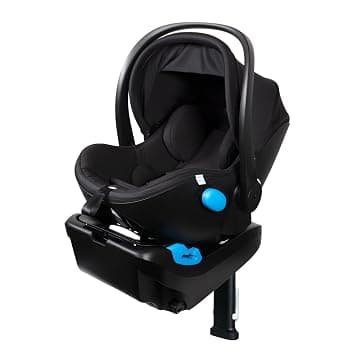
Clek Liing
The infant seat to buy if you want the install to be hard to get wrong. Rigid LATCH connectors click to the anchors and give a visual confirmation rather than a tightening job, and the load leg takes rotation out of the equation. Everything else here asks more of the person fitting it.
We may earn a commission on this link. It never changes the ranking.
- Type
- Infant seat with base
- Install
- Rigid LATCH, load leg, plus European belt path
- Best for
- One primary vehicle, install confidence
- Note
- Baseless install supported for cabs
What works
- Rigid LATCH removes the pull-and-pray step that belted installs depend on
- Load leg braces against the vehicle floor, which limits how far the seat can rotate forward
- European belt path is included for baseless installs in taxis and hire cars
- Fabric options include flame-retardant-free constructions, which is rare and is a real differentiator for some buyers
What to know
- The most expensive infant seat here by a wide margin
- The base and load leg together take real floor space, which is a problem in a very small car
- Heavier than the baseless options once the base is in
$249.99
Price checked Sep 4, 2026
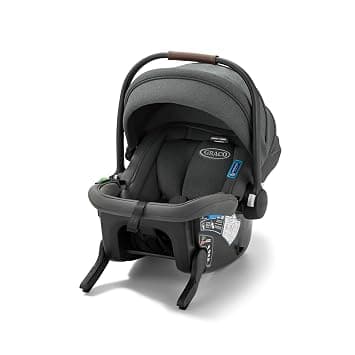
Graco Gomax Infant Car Seat, baseless
The rigid LATCH connectors are built into the seat itself rather than into a base, which is the whole argument for it. Graco says plainly that the stay-in-car base is available and is not required to install, so a family running one carrier between two cars, or between a car and a grandparent's car, buys the seat once and installs it in seconds in either. That is a different answer to the two-vehicle problem than everything else here, which solves it by selling you a second base. It takes rear-facing infants from 4 to 30 pounds and up to 32 inches, has a 4-position one-hand recline with a bubble level, and its fabrics are fire-resistant without added flame-retardant chemicals, a construction that used to be a premium-brand differentiator. Graco sells the same seat with the base included for about fifty dollars more.
We may earn a commission on this link. It never changes the ranking.
- Type
- Infant seat, no base required
- Install
- Built-in rigid LATCH, stay-in-car base optional
- Limits
- 4 to 30 lbs, up to 32 inches, rear-facing
- Recline
- 4 positions, one hand, with a bubble level
What works
- Rigid LATCH is in the seat, not in a base, so a second vehicle costs nothing extra
- Rigid connectors give a click and a visual check rather than the pull-and-pray of a belted install
- Bubble level indicator and a 4-position recline that remembers the last install position
- Fire-resistant fabrics with no added flame-retardant chemicals, at a mass-market price
- No-rethread harness, so the headrest and harness adjust together with the child in the seat
What to know
- No load leg, so the crash performance envelope is different from the Liing's
- 4 to 30 pounds is a lower ceiling than the 35-pound infant seats here, so it is outgrown sooner by weight
- Rigid LATCH needs the vehicle's lower anchors, so a middle seating position that has none is a problem this seat does not solve
- A carrier this affordable does not come with the fabrics or the fit and finish of the Cleks around it
$559.99
Price checked Sep 4, 2026
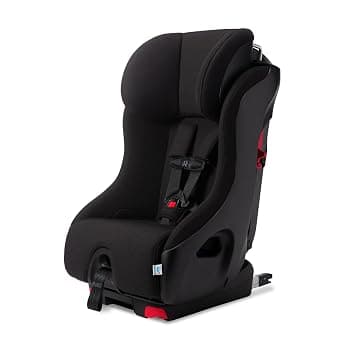
Clek Foonf
The narrow-body convertible, and the reason people pay Clek money. If you are trying to get three seats across a bench, this is the shortlist. The steel-and-magnesium frame and the rigid LATCH install are the other half of the argument, and the weight is the price you pay for both.
We may earn a commission on this link. It never changes the ranking.
- Type
- Convertible, rear and forward facing
- Install
- Rigid LATCH, anti-rebound bar
- Key spec
- Narrow body for three-across
- Weight
- Heavy, install once
What works
- Narrow enough to make three-across viable in cars where standard convertibles will not fit
- Rigid LATCH install with an anti-rebound bar included
- Built to stay in one car for years, with a long rear-facing range
What to know
- Very heavy, so this is not a seat you move between cars
- The most expensive seat on this page
- Rear-facing it takes real front-to-back space, so measure before you commit
$429.99
Price checked Sep 4, 2026
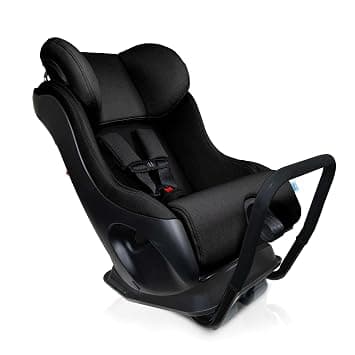
Clek Fllo
The Foonf's narrow shell without the rigid LATCH hardware and without the weight. For most three-across families this is the more sensible buy, because you keep the width advantage that made you look at Clek and drop a hundred and thirty dollars and several pounds.
We may earn a commission on this link. It never changes the ranking.
- Type
- Convertible, rear and forward facing
- Install
- Belt or standard LATCH
- Key spec
- Narrow body, lighter than Foonf
- Accessory
- Anti-rebound bar sold separately
What works
- Same narrow-body advantage that makes three-across possible
- Meaningfully lighter than the Foonf, which matters if it ever moves
- A hundred and thirty dollars less for the width you were actually buying
What to know
- Belted or standard LATCH install rather than rigid, so the install asks more of you
- Anti-rebound bar is a separate purchase
- Still a premium price against mass-market convertibles
$249.99
Price checked Sep 4, 2026
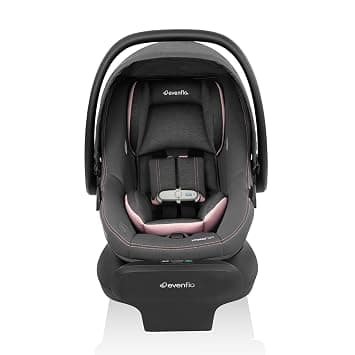
Evenflo LiteMax NXT Infant Car Seat with SensorSafe
The mainstream infant seat, and the one that answers a real problem rather than a marketing one. SensorSafe is a chest clip that talks to your phone and alerts you if the child is left in the seat. Hot-car deaths are an actual recurring cause of child death, and this is a rational thing to buy.
We may earn a commission on this link. It never changes the ranking.
- Type
- Infant seat with base
- Install
- LATCH or vehicle belt
- Feature
- SensorSafe chest clip with phone alerts
- Compatibility
- Evenflo travel-system frames
What works
- SensorSafe chest clip alerts your phone if a child is left behind in the vehicle
- Half the price of the Clek infant seats and stocked almost everywhere
- Light carrier, which is the spec parents notice most in the first six months
- Matches the Evenflo travel-system frames, so no adapter question
What to know
- Standard belted or LATCH base install rather than rigid LATCH
- Fabric and finish are clearly below the premium brands
- The alert feature depends on a paired phone and a live app, which is one more thing to keep working
$419.99
Price checked Sep 4, 2026
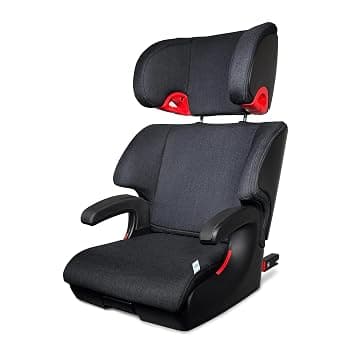
Clek Oobr
A high-back booster with a rigid LATCH connection, which is the detail that matters: a booster attached to the car does not slide around the seat when it is empty, and it holds position for a child who leans. Boosters are the stage people economise on, and they are the stage where belt fit decides everything.
We may earn a commission on this link. It never changes the ranking.
- Type
- High-back belt-positioning booster
- Install
- Rigid LATCH
- Key spec
- Recline to match vehicle seat angle
- Stage
- After the harnessed years
What works
- Rigid LATCH keeps the booster located on the seat rather than sliding when unoccupied
- High back positions the shoulder belt correctly for children who are not yet tall enough for the car's own belt
- Reclines to the vehicle seat angle, which stops the head-slump problem on long journeys
What to know
- Expensive for a booster, and boosters are the category where cheap options genuinely work
- Heavy for something a child may want to move between cars
- Backless conversion is a later stage rather than a same-day option
The comparison, in one table
| Seat | Price | Stage | Install | Solves |
|---|---|---|---|---|
| Clek Liing | $499.99 | Infant | Rigid LATCH plus load leg | Install confidence |
| Graco Gomax, baseless | $249.99 | Infant | Rigid LATCH, no base needed | One seat, two cars |
| Clek Foonf | $559.99 | Convertible | Rigid LATCH | Three-across |
| Clek Fllo | $429.99 | Convertible | Belt or LATCH | Three-across, lighter |
| Evenflo LiteMax NXT with SensorSafe | $249.99 | Infant | LATCH or belt | Price and hot-car alerts |
| Clek Oobr | $419.99 | Booster | Rigid LATCH | Belt fit in the booster years |
The order to buy in
Almost nobody buys all six of these, and the sequence matters more than the shortlist. An infant carrier that clicks into a base and out onto a stroller frame is worth having for the first nine to fifteen months, because a sleeping newborn who has to be unbuckled in a car park is a problem you only need once. After that a convertible seat goes in and stays in, ideally rear-facing until the child runs out of shell height. The booster is a separate decision several years later, made against a child whose torso length you cannot predict today. Buying the whole sequence at once is a common and expensive mistake, because the seats you buy in year four will be better than the ones on sale now.
Who each one is wrong for
The Liing is wrong for a family running a car seat between two vehicles, because the value is in the base and the base stays put. Buy the Gomax instead, which carries its rigid connectors on the seat and needs no base in either car.
The Gomax is wrong for a family whose seat will live in one car for the whole first year, since the thing you are paying nothing extra for is the thing you will not use, and it is wrong for a baby heading past thirty pounds inside the infant-seat stage. It is right for one seat, two cars and no appetite for buying hardware twice.
The Foonf is wrong for anyone who is not solving a width problem. It is heavy and it is expensive, and if three-across is not on your horizon you are paying for an engineering answer to a question you do not have. The Fllo is the better version of the same idea for most people.
The Evenflo is wrong for a buyer who wants premium materials and the most forgiving possible install, because it is neither. It is right for a buyer who correctly notices that the seat is federally crash tested either way, and would rather spend the difference on a professional fitting check.
The Oobr is wrong for a child who genuinely fits the vehicle's own belt, because at that point a booster is unnecessary. Use the five-step test before you buy anything: back against the seat, knees bending at the edge, lap belt on the thighs, shoulder belt across the collarbone, and the ability to stay that way for the whole journey.
Questions people actually ask
How long should a child stay rear-facing?
The American Academy of Pediatrics dropped the two-year rule and now says children should ride rear-facing for as long as they fit their seat's height and weight limits. In practice that is usually well past the second birthday with a convertible seat, and the limiting factor is the seat's shell height rather than legs, which children fold comfortably.
Is an expensive seat safer than a cheap one?
Not in the crash test. Every seat sold in the United States meets FMVSS 213. Money buys easier installation, narrower shells, better fabrics, longer rear-facing ranges and features like load legs and anti-rebound bars. Those things reduce the chance of an install error, which is a real safety benefit, but it is not the same claim as a safer seat.
LATCH or the seatbelt?
Either, correctly. They are equally acceptable when done right, and you use one or the other rather than both unless the manual specifically permits it. LATCH has a combined weight limit that includes the seat itself, and past that limit you must switch to the vehicle belt. That limit is in your manuals.
Do car seats expire?
Yes, and the date is stamped on the shell. Plastics degrade, standards change, and manuals get lost. Six to ten years from manufacture is the common range depending on the brand. That is also why an unknown second-hand seat is a bad idea.
What is the single most common install mistake?
A loose install. The seat should not move more than an inch side to side or front to back when you pull at the belt path. The second most common is a chest clip sitting on the belly rather than at armpit level, which changes where the harness holds the child.
Where a car seat sits in the rest of the kit
Six questions have their own guides. Whether a seat physically fits your vehicle, which eliminates more options than any other filter, is in will this car seat fit my car. How long to stay rear-facing has its own guide. The date moulded into the shell, and why it matters more for a hand-me-down than people think, is covered in the expiration dates guide. The first federal side-impact standard, which takes effect in December 2026, has its own explainer on FMVSS 213a. When to move off the lower anchors is in the LATCH weight limit. And the last transition, out of the Oobr and into a plain seat belt, is decided by a fit test rather than a birthday, covered in when to move from a booster to a seat belt. And why a winter coat under the harness undoes the fit you just set, with the check that settles it, is in winter coats and car seats.
If the back seat itself is the binding constraint, the five seats ranked purely on installed front-to-back footprint are in the best infant car seats for a small car, which covers the measurement to take before you buy.
Taking the seat on a flight is its own set of rules: the red-lettered aircraft label to find, which boosters and harnesses stay off the plane, and what the airline must do if the seat does not fit, all in car seat on a plane.
Whether a seat stays in service after a crash, under NHTSA's minor-crash test or a stricter manual, is in do you need to replace a car seat after a crash.
An infant seat is bought once and used with a frame, so the adapter list in the stroller guide decides how much of a travel system you actually end up with. Two things a car seat is not: a sleep surface once you are out of the car, which is the whole argument of the cribs and bassinets guide, and a way to carry a baby any distance — that job belongs to something in the carrier guide.
Sources
- Clek product specifications (clekinc.com)
- Evenflo LiteMax NXT with SensorSafe (evenflo.com)
- NHTSA car seat ratings and inspection locator
- AAP guidance on child passenger safety
- CPSC recall database
As an Amazon Associate we earn from qualifying purchases. We earn a commission on some links, at no extra cost to you. It never changes which products we recommend or the order they appear in. Full disclosure

Who wrote this
Editor, gear and the arithmetic of a small home
Marisa Okonkwo edits BabyGearSearch and writes the hardware half of it: strollers, car seats, carriers and the furniture around them. She reads the specification sheet, the fit list and the returns policy in full before she reads a single review, because the difference between two apparently identical strollers is almost always a number one of them declines to publish.
More from MarisaThe standard
How this guide was built
- Manufacturer specification sheets and warranty terms, read in full rather than summarised from a listing.
- The federal safety standard the product is certified to, plus anything NHTSA, the AAP or the CPSC has published on it.
- Owner reports at volume, including the one-star reviews, which is where failure modes live.
- Every price checked against the live listing on the date printed beside it.