Nursery Temperature: Why Overheating Is the Real Risk, Not Cold
There is no official nursery temperature. What the evidence names is overheating, and the layer rule that manages it whatever the thermostat reads.
- Editor, gear and the arithmetic of a small home
- Aug 24, 2026
- 10 min read
In this guide
Most new parents worry about the nursery being too cold. The evidence points the other way. A room that is a little cool and a baby dressed for it is a manageable, low-risk situation. A room that is warm, with a baby in a sleeper and a blanket and a swaddle on top, is the combination that shows up in the safe-sleep research again and again.
There is no single number that makes a nursery correct. What exists instead is a rule about layers, a rule about what not to add, and a way to check the baby rather than the thermostat. That is more useful than a target temperature, because it works in a drafty older house and a new-build with a heat pump alike.
What overheating actually looks like
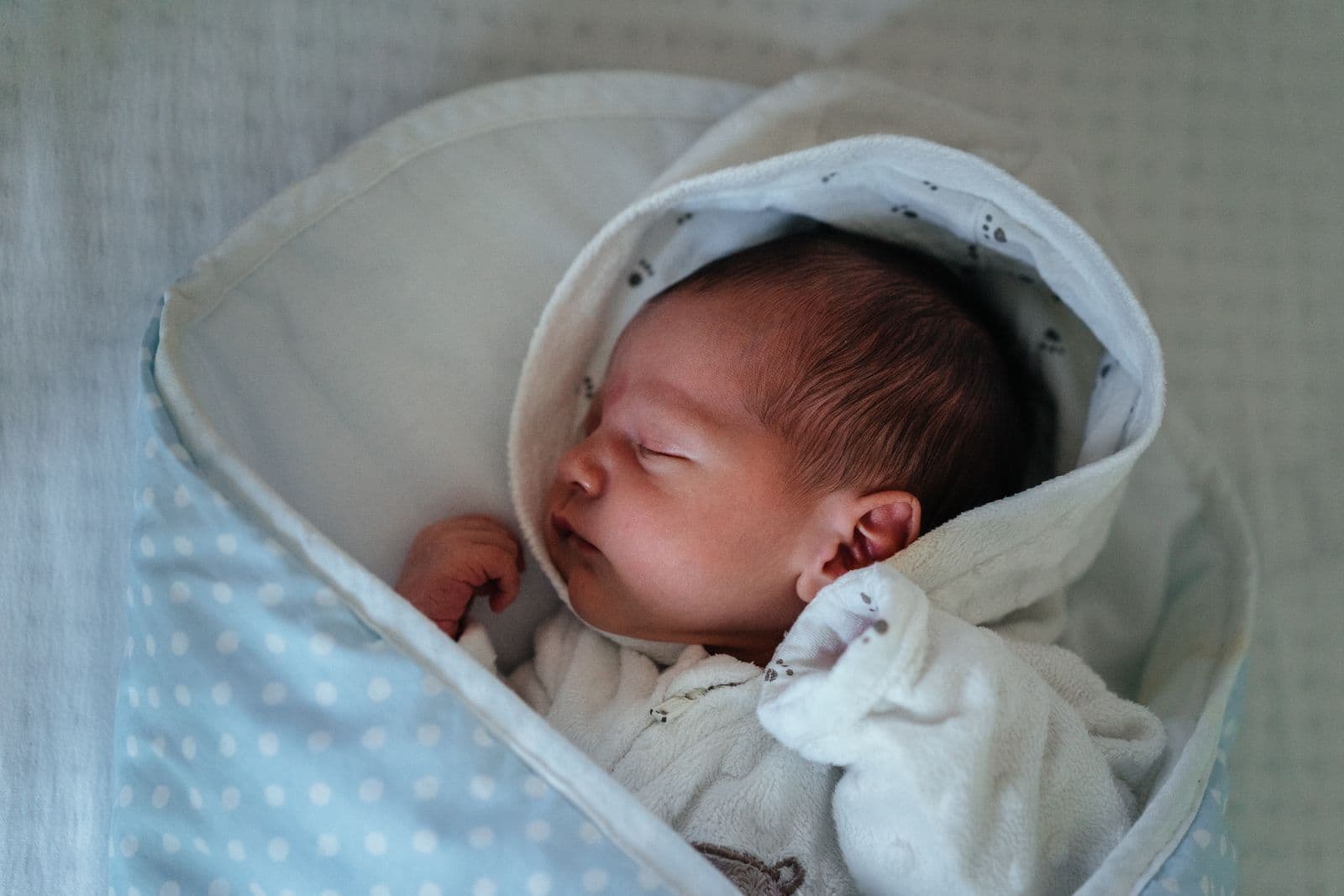
Not a specific reading on a thermostat. Overheating in an infant shows up as damp or matted hair, flushed skin, heat rash across the chest and neck, and breathing that is faster than usual. A baby who is overheated is often quieter and less responsive than one who is simply asleep, which is part of why the guidance treats it seriously rather than as a comfort issue.
None of that requires a fever or an illness. A baby dressed for a 60-degree room in a 74-degree one can show these signs from clothing and bedding alone, which is the entire mechanism this article is about.
What the AAP guidance actually says
The American Academy of Pediatrics names overheating and overbundling among the modifiable factors it associates with sleep-related infant death, in the same 2022 policy statement that covers sleep position, sleep surface and loose bedding. The recommendation is not a target temperature. It is a rule about relative dressing: a room that is comfortable for a lightly clothed adult, and an infant dressed in no more than one layer more than that adult would wear to be comfortable in it.
That framing matters because it travels. It works whether the house runs at 65 in winter with the heat turned down overnight or at 78 in a poorly insulated apartment in August with a window unit doing its best. The number on the thermostat is not the variable the guidance is built around. The layer count is.
The companion evidence review behind the same policy statement goes further into why: case-control studies going back decades associate excess clothing and bedding with elevated risk, and the association holds up across different climates and different eras of nursery heating, which is part of why the recommendation is stated as a principle rather than a number that would need updating by region.
The layer rule, worked through
Start with what you would wear to sit comfortably, awake, in that room right now. A t-shirt and light pants in a warm room. A long-sleeve top and something warmer in a cool one. Add one layer of that weight for the baby, not one garment: a bodysuit under a sleeper counts as the sleeper's layer plus one, and a swaddle or a wearable blanket on top of that is a second addition, not the one the rule allows.
Warm room, light dressing. A bodysuit and a lightweight sleeper, no swaddle blanket layered on top of a sleep sack.
Average room, one mid-weight layer. A bodysuit under a fleece or thicker cotton sleeper, or a bodysuit under a lightweight sleep sack.
Cool room, one added layer done through the sack rather than blankets. A long-sleeve bodysuit under a heavier-weight wearable blanket, rather than a light sleeper plus a loose blanket, which is the combination the safe-sleep guidance excludes from the crib entirely.
The sleep sack industry uses a rating called TOG, short for thermal overall grade, borrowed from the bedding industry, to describe how much warmth a sack itself adds: roughly 0.5 TOG for warm-weather use, 1.0 TOG as the year-round middle option in most centrally heated homes, and 2.5 TOG for a genuinely cold room with the heating off overnight. Matching the TOG rating to the room, rather than buying one sack and layering clothing underneath to compensate, is the easiest way to apply the layer rule without doing the arithmetic every night.
Why there is no official number, and what to do instead
Search for a target temperature and you will find a wide, inconsistent range across different sources, typically somewhere between the high 60s and low 70s Fahrenheit. None of it is a federal standard, and treating any single figure as a rule to hit is the wrong instinct, for the same reason the AAP guidance is written as a relative rule rather than an absolute one: a thermostat reading does not account for how the baby is dressed, where the crib sits relative to a heating vent or a window, or how much a room holds heat overnight compared with during the day.
The more reliable version is a comfort check on your own body plus the layer rule above, backed up by checking the baby directly rather than trusting either the thermostat or the room's reputation for running warm or cold.
How to check the baby, not the room
Feel the back of the neck or the chest, not the hands or feet. Hands and feet run cooler than the body's core as a matter of normal circulation and are a poor read on whether a baby is too warm; the nape of the neck and the chest reflect the trunk's temperature far more accurately. Damp or sweaty at the neck means too warm, whatever the thermostat says. Cool but not cold at the neck with warm hands and feet is normal and does not call for another layer.
Check early in the night and again a few hours in if you are up anyway, since a room's temperature and a baby's own heat output both drift after the heating cycles or after a longer sleep stretch than usual.
Where the heat and cold actually come from
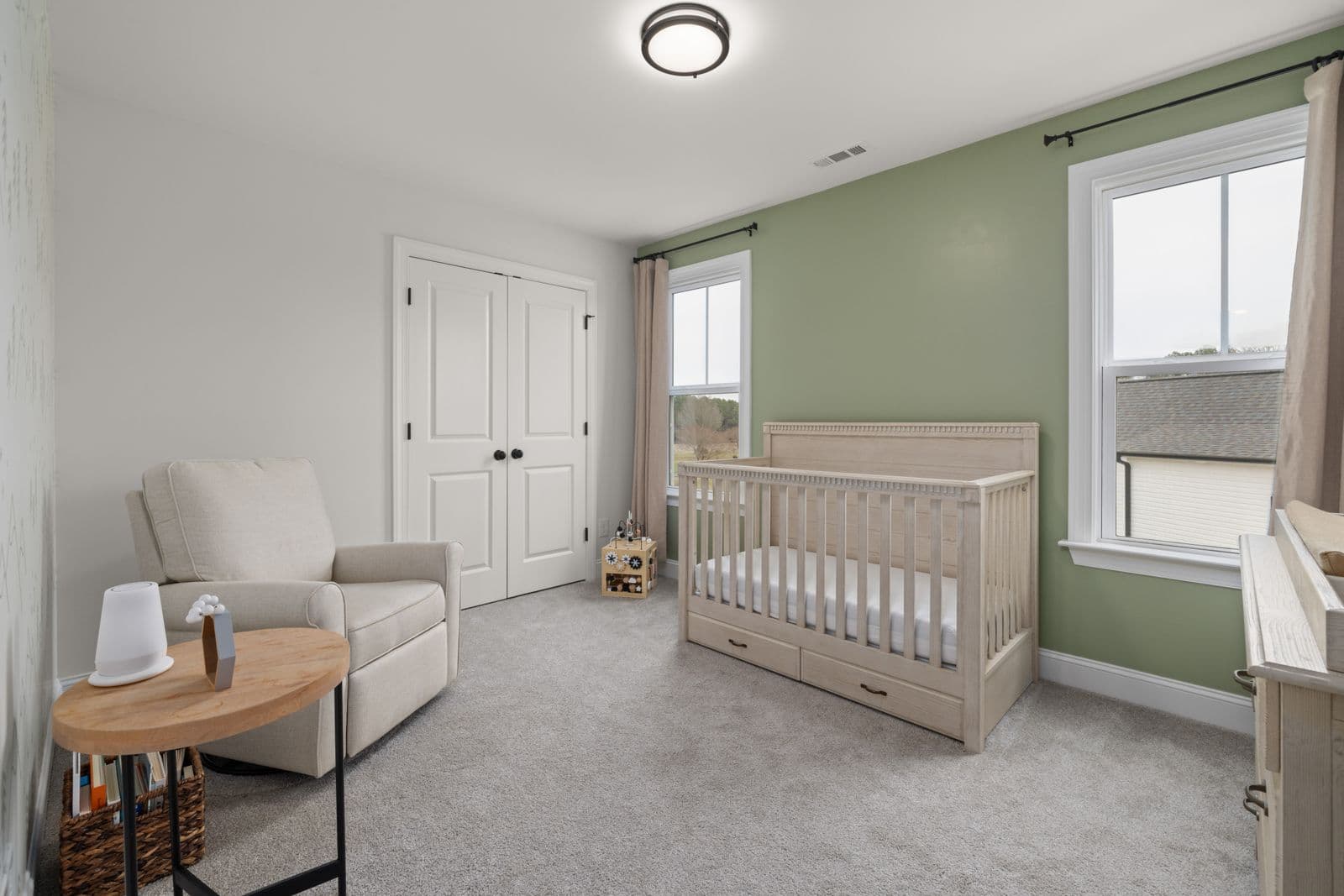
A crib positioned under a window gets colder at night in winter as the glass radiates heat out, and warmer during the day in summer as direct sun comes through, which connects the temperature question to the same window that matters for blackout in a nursery: the fix that keeps light out in the morning is often the same curtain and window placement that keeps a crib out of a hot afternoon beam.
A crib beside a heating vent or a radiator sees a more concentrated, localized version of the same problem, gaining several degrees over the rest of the room. Move the crib rather than the vent, and if that is not possible, close or redirect the vent nearest the crib.
Portable heaters and window units earn a specific caution: never aim either directly at a crib, and keep a space heater at least three feet from anything flammable, including the crib itself, per the standard fire-safety clearance for the appliance. A thermostat set for the room as a whole is a better tool for a nursery than a device placed to fix one cold or hot spot near the crib.
What does not help
An extra blanket "just in case." Loose blankets in a crib are excluded from the safe-sleep guidance on their own separate grounds, entanglement and suffocation risk, and adding one to manage temperature stacks that risk on top of the overheating one rather than solving either.
A lower thermostat setting overnight with the baby's daytime layers left on. The layer rule is about the baby's clothing relative to the current room temperature, not a fixed outfit that travels between rooms and times of day without adjustment.
Covering the head. A hat indoors, or a swaddle or sleeper that rides up over the head, traps heat at the one place the body sheds it fastest and is named in the same AAP guidance as a specific overheating and suffocation risk. Bare head, in the crib, every time.
Guessing from how warm the room feels to an adult standing in it for thirty seconds. A baby lying still, wrapped in fabric, generates and retains heat differently than someone standing and moving through the room. The neck check settles the actual question; the room temperature by itself does not.
The rest of the nursery's environment
Temperature is the third lever in a nursery alongside the two that get more attention. Light is covered in blackout in a nursery, and sound is covered in the sound machine roundup, which also notes that a sound machine placed too close to a crib is its own separate exposure question. The sleep surface itself carries the strongest safety evidence of anything in the room, covered in the cribs and bassinets guide and in what firm means on a crib mattress. The full set of safe-sleep recommendations, including sleep position and what belongs in the crib, is in the Safe Sleep for Babies Act guide.
Questions people actually ask
What temperature should a nursery actually be?
There is no official target number. The guidance is relative rather than absolute: dress the baby in no more than one layer more than a lightly clothed adult would wear to be comfortable in that room, at whatever temperature the room happens to be, and check the back of the neck to confirm.
How can I tell if my baby is too warm without a thermometer?
Feel the back of the neck or the chest, not the hands or feet, which run cooler than the body's core as a normal part of circulation. Damp hair, flushed skin, heat rash and faster breathing are the other signs to watch for.
Is it safer to keep a nursery cooler than warmer?
The evidence points toward overheating as the more consistent risk factor, so when in doubt, a slightly cool room with a baby dressed one layer warmer than the room alone would suggest is the safer default than a warm room with heavy layers and a blanket.
What TOG rating sleep sack should I buy?
Roughly 0.5 TOG for a genuinely warm room or summer, 1.0 TOG as the year-round choice in most centrally heated homes, and 2.5 TOG for a consistently cold room with the heating off overnight. Match the sack to the room rather than layering extra clothing underneath a lighter sack to compensate.
Can I use a fan in the nursery?
A fan that circulates air in the room generally, rather than blowing directly on the crib, is a reasonable way to manage a warm room. Aiming any fan or heater directly at a crib is the thing to avoid, regardless of which direction the temperature problem runs.
Sources
As an Amazon Associate we earn from qualifying purchases. We earn a commission on some links, at no extra cost to you. It never changes which products we recommend or the order they appear in. Full disclosure
Who wrote this
Editor, gear and the arithmetic of a small home
Marisa Okonkwo edits BabyGearSearch and writes the hardware half of it: strollers, car seats, carriers and the furniture around them. She reads the specification sheet, the fit list and the returns policy in full before she reads a single review, because the difference between two apparently identical strollers is almost always a number one of them declines to publish.
More from MarisaThe standard
How this guide was built
- Manufacturer specification sheets and warranty terms, read in full rather than summarised from a listing.
- The federal safety standard the product is certified to, plus anything NHTSA, the AAP or the CPSC has published on it.
- Owner reports at volume, including the one-star reviews, which is where failure modes live.
- Every price checked against the live listing on the date printed beside it.