The Best Infant Car Seats for a Small Car, Measured Front to Back
Three infant seats ranked on the number that decides a compact car: how much front-to-back room the shell eats at the newborn recline angle.
- Editor, gear and the arithmetic of a small home
- Sep 13, 2026
- Updated Sep 29, 2026
- 12 min read
3 products compared
In this guide
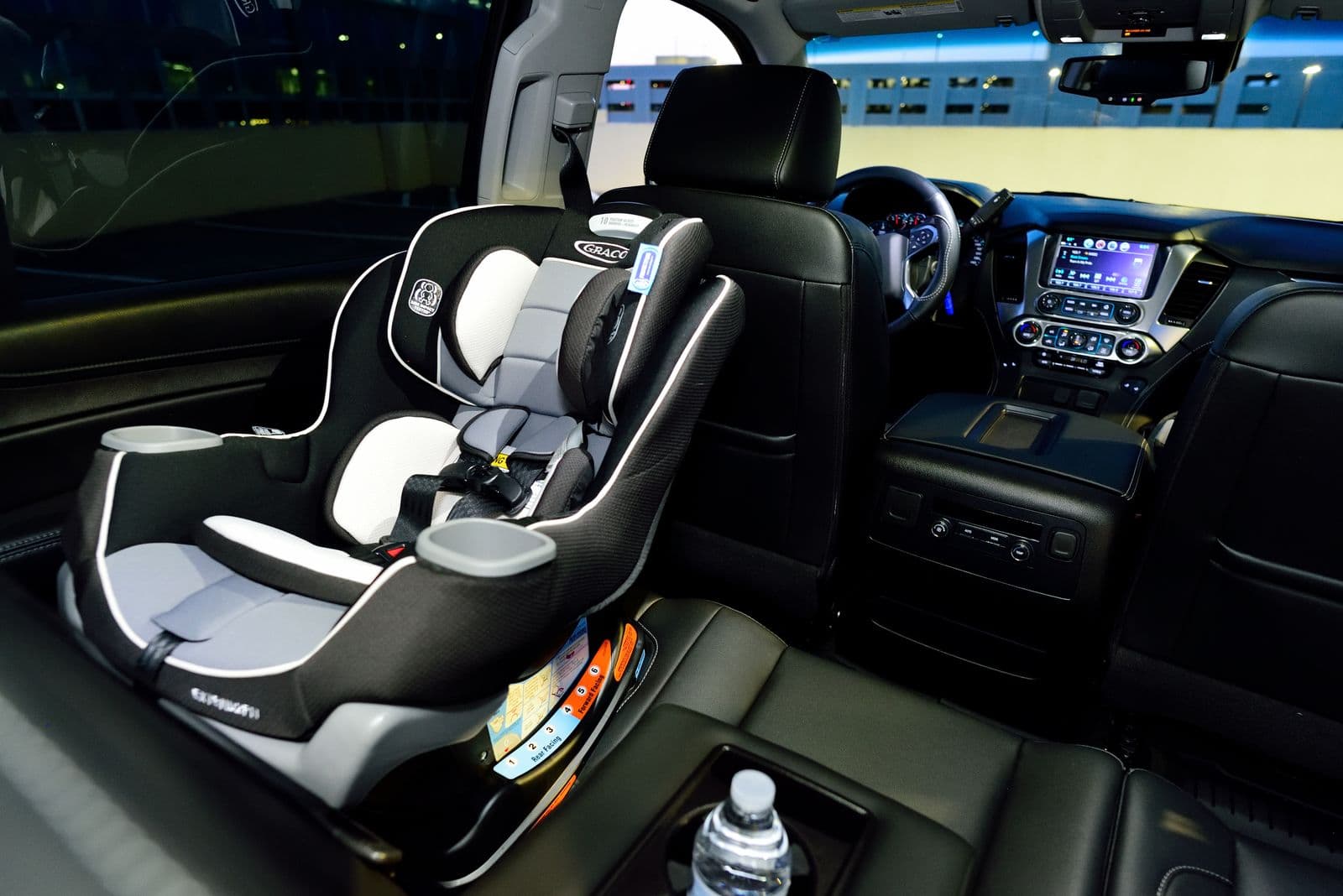
Every infant car seat sold in the United States has passed the same federal crash test. FMVSS 213 is pass or fail, and a seat on a shop shelf has passed it. So a compact-car family is not shopping for safety. It is shopping for the one thing that varies wildly between seats and that almost no product page will tell you plainly: how many inches of front-to-back room the shell takes out of the back seat once it is reclined far enough for a newborn.
That number is the whole problem. Reclining a rear-facing seat pushes the top of the shell into the seatback while the foot end swings forward into the front passenger's knees. Two seats with identical widths and weight limits can differ by three inches of footprint, and three inches decides whether a passenger sits normally or rides with the rail pulled all the way forward.
The four numbers that actually decide this
Front-to-back footprint at the newborn recline, not the marketing dimension. Manufacturers publish a box dimension for the carrier. What matters is the installed footprint, and Car Seats For The Littles, which measures seats during hands-on car seat checks, puts real numbers on it: a Century CarryOn takes about 25 inches, a Chicco KeyFit 30 about 27, and an Evenflo SecureMax about 31. Six inches separate the ends of that range on seats that all look the same in a photograph.
Width, but only if a third seat has to fit. A 17-inch shell and an 18-inch shell make no difference to a family with one child. They make an enormous difference across a bench that has to carry three restraints. Width is the three-across number and footprint is the small-car number, and they are not the same question.
The height limit, which usually ends the seat before the weight limit does. Every seat here stops at 32 inches, but some infant seats stop at 30. A baby on a normal growth curve hits a height limit months before a 30-pound weight limit, so a two-inch difference in the ceiling is worth more than it looks.
How forgiving the install is. NHTSA publishes Ease-of-Use Ratings on a five-star scale across four categories: the instruction manual, the vehicle installation features, the labels on the seat itself, and securing the child. A seat that is hard to install correctly will sometimes be installed incorrectly, and a correctly installed seat protects a baby better than a badly installed one at any price, which is why install ease belongs on the shortlist beside footprint.
One more thing worth knowing before you buy in late 2026. FMVSS 213a, the side-impact standard, and FMVSS 213b, the revised main standard, both become mandatory on 5 December 2026. The 213a date was originally 30 June 2025 and was pushed back to align the two. Early compliance has been permitted throughout, so seats certified to the new standards sit on shelves now beside seats that are not. Ask the retailer which you are buying.
The picks
$439.96
Price checked Sep 29, 2026
Cybex Cloud G Pro Infant Car Seat with Load Leg Base
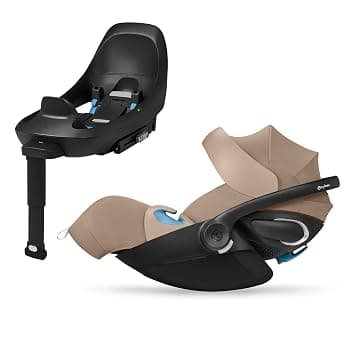
It leads this list because 26.5 inches is the smallest installed front-to-back figure published for any seat here, the one number a small car cares about. The costs are price and mass: at 439.96 it is more than double the Maxi-Cosi and passes the same federal crash test, and at 12 pounds it is the heaviest unit here. What the money buys is real and specific: the seat reclines substantially flatter than a standard carrier once out of the vehicle, which addresses the documented problem of a young baby left slumped in a car seat for hours in a position that compresses the chest. It ships with a load leg and an infant insert for 4 to 11 pounds, and it measures 26.5 inches installed.
We may earn a commission on this link. It never changes the ranking.
- Child limits
- 4 to 30 lbs, up to 32 inches
- Unit weight
- 12 lbs
- Dimensions
- 26.5 L x 17.6 W x 23 H inches
- Base
- Anti-rebound base with load leg
What works
- Reclines far flatter than a standard carrier out of the vehicle, a real posture advantage
- Load leg base and a 4 to 11 pound infant insert included
- 26.5-inch installed length beats the Chicco and the Maxi-Cosi
- Rear-facing only by design, removing an entire category of misuse
What to know
- More than double the Maxi-Cosi price for the identical certification
- 12 pounds is the heaviest unit here by a wide margin
- Load leg needs clear floor, ruling out some rear floor storage wells
- 17.6 inches wide, so three across is off the table
$199.99
Price checked Sep 29, 2026
Chicco KeyFit Max ClearTex Infant Car Seat
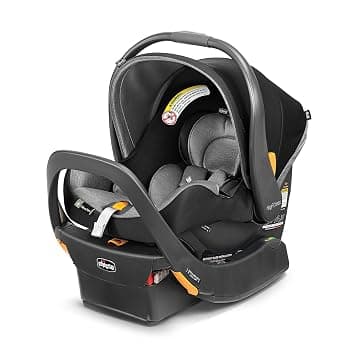
The KeyFit built its reputation on installing correctly the first time, and the Max carries that forward with a 16.5-inch shell, the narrowest here. Its integrated anti-rebound bar limits how far the seat rotates toward the vehicle seatback in a frontal crash, and it sits under the base rather than adding depth at the child's feet. The ClearTex fabric carries no added flame retardants and the seat holds GREENGUARD Gold certification for low chemical emissions, a real differentiator in this bracket. The cost is mass: roughly 10 pounds of carrier and 8.5 of base.
We may earn a commission on this link. It never changes the ranking.
- Child limits
- 4 to 30 lbs, up to 32 inches
- Carrier weight
- About 10 lbs, base 8.5 lbs
- Dimensions
- About 28 L x 16.5 W x 23.5 H inches
- Fabric
- ClearTex, no added flame retardants, GREENGUARD Gold
What works
- 16.5-inch shell is the narrowest here, which is what a three-across bench needs
- Integrated anti-rebound bar without the extra footprint a load leg demands
- ClearTex fabric has no added flame retardants and holds GREENGUARD Gold
- Five-position headrest raises with the harness, so no rethreading
What to know
- 10-pound carrier is a pound over the Maxi-Cosi, and it is felt every trip
- Roughly 28 inches long, so the width advantage is not a footprint advantage
- Tops out at 30 pounds, five under the older KeyFit 35 it sits beside on the shelf
$179.99
Price checked Sep 29, 2026
Maxi-Cosi Mico Luxe Infant Car Seat with Base
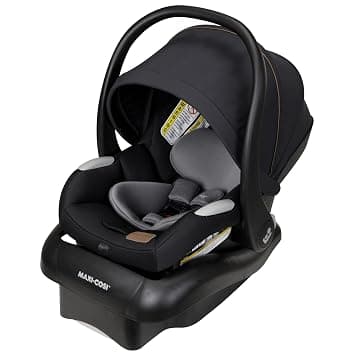
Start with who this is wrong for, because it is the clearest case here. At 17.7 inches wide and 28.9 inches long the Mico Luxe is both the widest and the longest seat in this group, so it is the wrong answer for a three-across bench and for the tightest compacts. In a normal small saloon with two adults up front and one child behind, none of that binds, and what you get instead is the best finish in the price bracket: proper fabrics, a useful canopy, and a 9-pound carrier a pound lighter than the Chicco.
We may earn a commission on this link. It never changes the ranking.
- Child limits
- 4 to 30 lbs, up to 32 inches
- Carrier weight
- About 9 lbs
- Dimensions
- 28.9 L x 17.7 W x 25.4 H inches
- Base
- Included, no load leg
What works
- Best softgoods and canopy near 180 dollars
- 9-pound carrier is the lightest of the three here
- 4 to 30 pounds and up to 32 inches matches the rest of this group
- Widely stocked, so a second base is easy to source
What to know
- 17.7 inches wide makes it the wrong seat for a three-across bench
- 28.9 inches long is the largest footprint here, the opposite of the brief
- No anti-rebound bar or load leg at a price where the Chicco includes one
Measure before you buy, because the specification will not save you
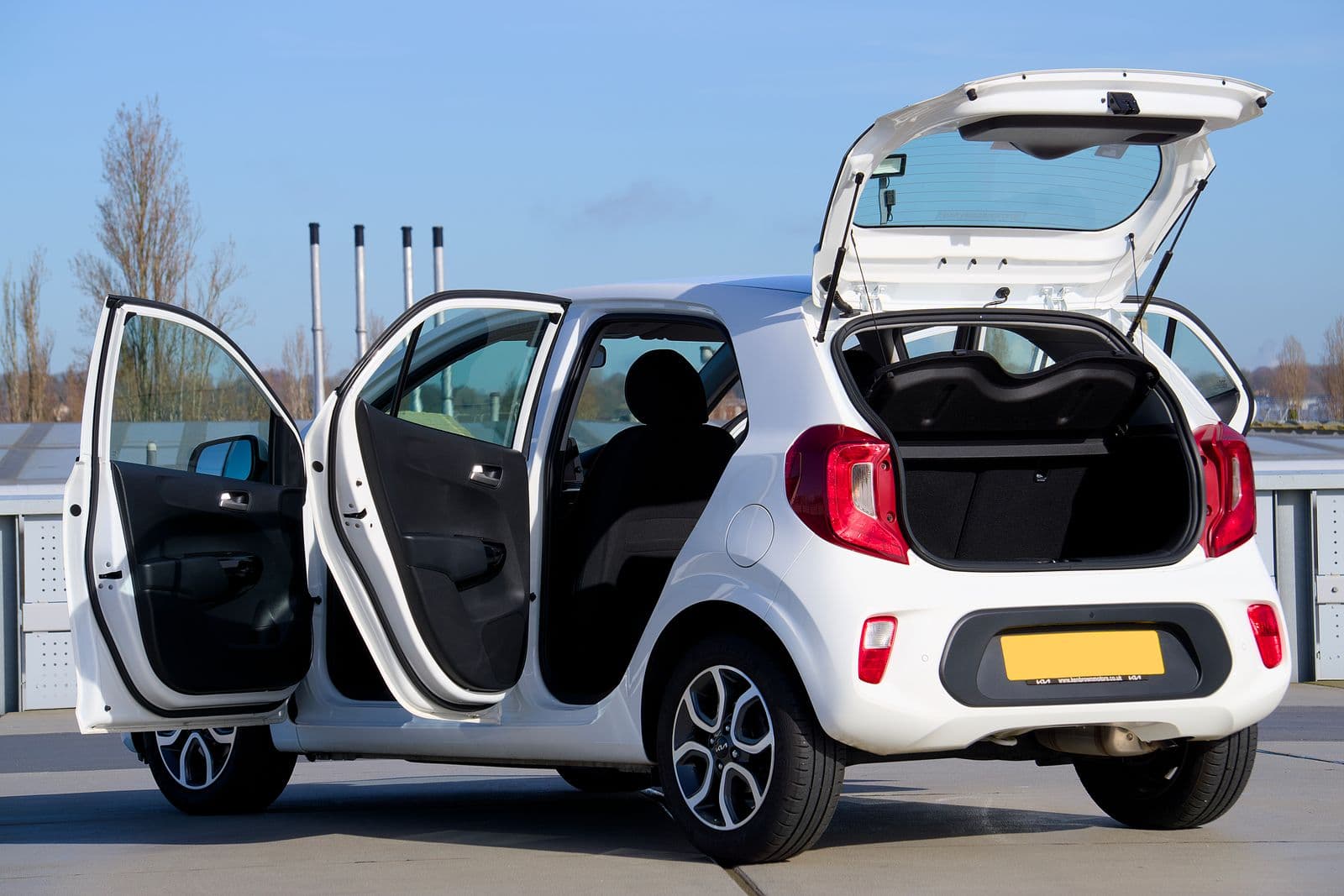
The published length of a car seat is not the space it will occupy in your car. Car Seats For The Littles is explicit that exact front-to-back measurement is difficult precisely because vehicle seats differ, some flat and some deeply recessed, and the same seat installed in two cars produces two different footprints.
So take the measurement yourself, in the car, before the seat arrives. Put the front passenger seat where an adult would actually sit. Measure from the vehicle seatback of the rear bench to the back of that front seat at knee height. Then compare it against the installed length figures above, and treat anything under two inches of margin as a fit you should verify before the return window closes. Buying from a retailer with a real returns policy is part of the purchase for a compact car, not an afterthought.
Recalls, and reading them accurately
Graco recalled selected SnugRide Turn and Slide rotating infant car seats in 2026, covering roughly 5,000 units sold between January and March of that year, after it was determined the carrier could detach from the base under certain crash conditions. The remedy is a free replacement seat.
Read that carefully, because a recall headline naming a brand is not a verdict on the brand's other products. The Turn and Slide is a rotating seat, and the non-rotating SnugRide line is not part of that action. The correct habit is to check the specific model and the manufacture date against the CPSC recall database and the manufacturer's own recall page, and to register the seat when you buy it so the notice reaches you directly.
Questions people actually ask
Is a smaller infant car seat less safe than a bigger one?
No. Every infant car seat sold in the United States has passed FMVSS 213, which is a pass-or-fail federal crash test, so the 179.99 Maxi-Cosi and the 439.96 Cybex both cleared the same bar. Size and price buy convenience features, materials and secondary crash structures such as anti-rebound bars and load legs. They do not buy a pass on a test the cheaper seat failed.
What actually takes up room in a small car, the width or the length?
Length, in almost every case. Width only matters when a third restraint has to fit across the bench. Front-to-back footprint is what pushes the front passenger seat forward, and it varies from roughly 25 to roughly 31 inches across seats that look identical in photographs, which is why the installed length figure is the one to compare.
Does a load leg make a seat take up more room?
Not front to back. A load leg braces downward from the base to the vehicle floor, so it adds no length at the child's feet. The constraint it creates is different: it needs flat, solid floor to brace against, which rules out vehicles with rear floor storage compartments or an uneven floor pan. Check your vehicle manual and the car seat manual before buying one.
How long will an infant car seat last before my baby outgrows it?
Height ends it first for most babies, not weight. All three seats here stop at 32 inches and run to 30 pounds. A baby on a typical growth curve reaches 30 to 32 inches somewhere around the first birthday, well before 30 pounds, so the height limit is the number to plan around.
Do I need a seat certified to the new FMVSS 213a and 213b standards?
Both become mandatory on 5 December 2026, and early compliance has been permitted, so both certified and not-yet-certified seats are on shelves now. A seat meeting the current standard is legal and passed a real crash test. If you are buying close to the deadline and intend to keep the seat for a second child, asking the retailer which standard a specific model meets is a reasonable question.
Where this fits in the rest of the car seat decision
The measurement step above deserves more room than a section here gives it. Will a car seat fit my car walks through taking it properly, including the three-across case and what to do when the numbers are marginal. Everything above assumes rear-facing, and how long to keep a child rear-facing covers where the limits sit and why the AAP dropped the age criterion.
When the seat is outgrown, car seat expiry dates explains what the date stamped on the shell means. The side-impact standard referenced above is covered in what FMVSS 213a tests. For the broader category rather than the small-car case, the car seat roundup ranks six seats across the infant, convertible and booster stages.
Sources
- NHTSA Car Seat Ease-of-Use Ratings
- NHTSA car seats and booster seats, including the inspection-station finder
- 49 CFR 571.213a, Child restraint systems, side impact protection
- Federal Register: FMVSS 213, 213a and 213b, response to petitions for reconsideration
- AAP policy statement, Child Passenger Safety
- Car Seats For The Littles, compact and narrow car seats
- CPSC recall database
As an Amazon Associate we earn from qualifying purchases. We earn a commission on some links, at no extra cost to you. It never changes which products we recommend or the order they appear in. Full disclosure

Who wrote this
Editor, gear and the arithmetic of a small home
Marisa Okonkwo edits BabyGearSearch and writes the hardware half of it: strollers, car seats, carriers and the furniture around them. She reads the specification sheet, the fit list and the returns policy in full before she reads a single review, because the difference between two apparently identical strollers is almost always a number one of them declines to publish.
More from MarisaThe standard
How this guide was built
- Manufacturer specification sheets and warranty terms, read in full rather than summarised from a listing.
- The federal safety standard the product is certified to, plus anything NHTSA, the AAP or the CPSC has published on it.
- Owner reports at volume, including the one-star reviews, which is where failure modes live.
- Every price checked against the live listing on the date printed beside it.