When to Move From a Booster Seat to a Seat Belt Alone
The federal fit test that decides it, the height number every state law repeats, and why a birthday is the wrong signal to wait for.
- Editor, gear and the arithmetic of a small home
- Sep 1, 2026
- 11 min read

In this guide
Every state sets a legal minimum for when a booster seat stops being required. Almost none of those minimums match what the American Academy of Pediatrics and the vehicle's own seat belt actually require to work. That gap is where most kids get moved out of a booster years before the belt fits them, because a birthday came around and the law stopped asking.
The correct trigger is not an age. It is whether the adult seat belt, unaided, holds a child's body the way it is engineered to. Here is the fit test that answers it, the standard the booster itself is certified to, and where state law falls short of the guidance.
The four stages, and what actually ends each one
NHTSA frames child passenger safety as four sequential stages, and the trigger to move between all of them is the same shape: outgrow the current seat's limits, not reach an age.
Rear-facing, from birth until the child reaches the top height or weight limit printed on that specific seat.
Forward-facing with a harness and tether, from the rear-facing limit until the child outgrows the harness's own height or weight limit. The AAP's 2018 policy statement, Child Passenger Safety, frames this as lasting for most children through at least four years of age, though the seat's printed limit is the actual stopping point, not the age.
Belt-positioning booster, from the harness limit until the vehicle's own lap and shoulder belt fits properly without help. The AAP frames this as lasting for most children through at least eight years of age, and its policy statement is explicit that a booster reduces the risk of nonfatal injury among four-to-eight-year-olds by 45 percent compared with a seat belt alone.
Seat belt alone, once it fits.
Two outgrowing events decide three of the four transitions, and neither one is a birthday. The only stage where age genuinely does the work is the fourth, because "does the belt fit" is a question about torso and leg length, and those correlate with age loosely enough that most children answer it somewhere between eight and twelve.
The fit test that decides the last transition
The AAP and the child-passenger-safety technician community both publish the same five checks, usually under the name the five-step test. A child is ready to drop the booster when every one of these is true at once, not most of them:
- Their back sits flat against the vehicle seat back.
- Their knees bend comfortably over the edge of the seat cushion, with feet flat on the floor.
- The lap belt sits low, across the tops of the thighs, not across the stomach.
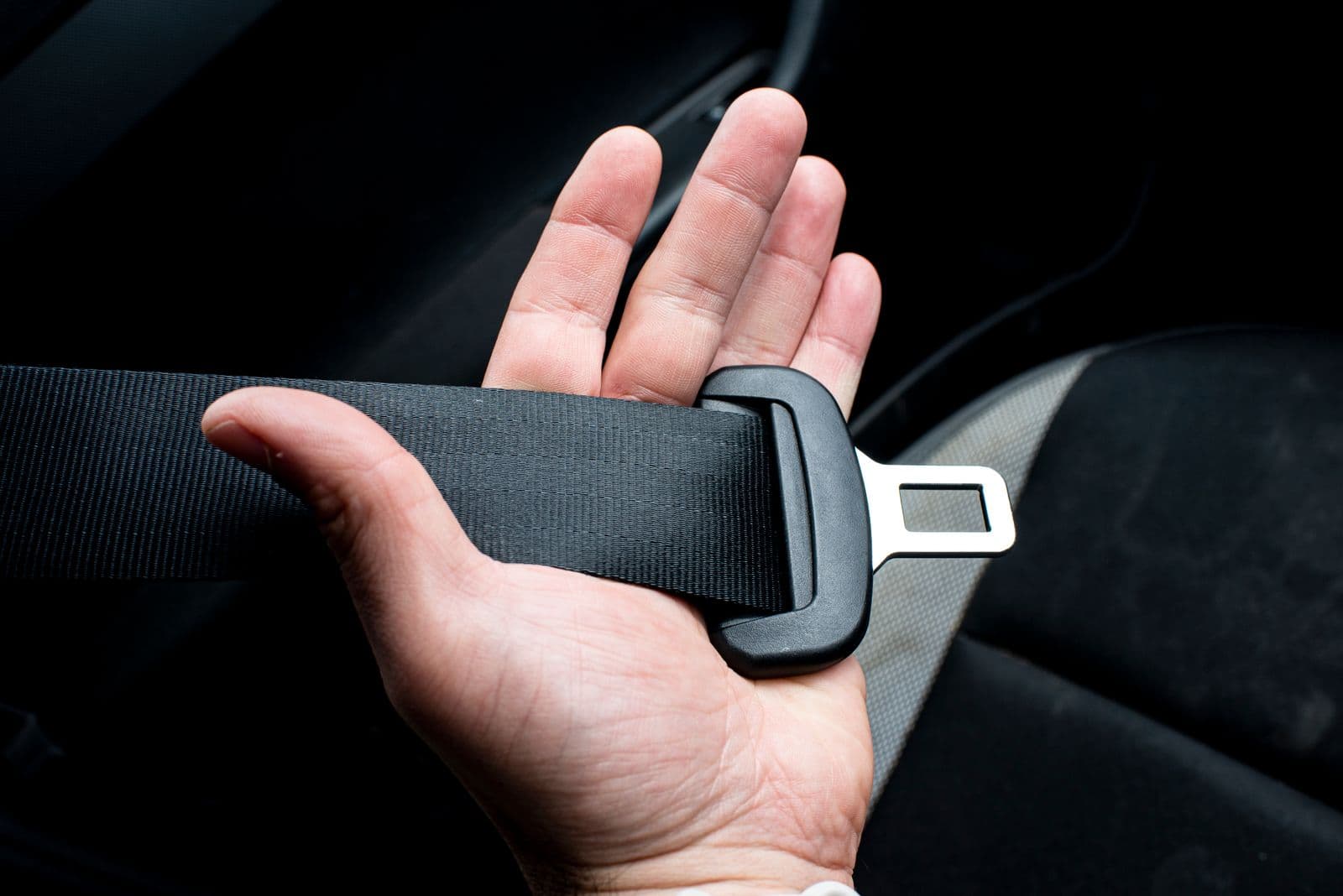
- The shoulder belt crosses the collarbone and chest, not the neck or the throat.
- The child can hold that position for the entire trip, not just for the ten seconds it takes to check.
A no on any single item means the booster stays. The most common failure is the shoulder belt, because a child can be tall enough for the lap belt to sit correctly and still short enough that the shoulder belt cuts across the neck, which is worse than no belt at all because it concentrates crash force on the throat rather than the sternum. A booster's entire job is to raise the child until the same adult belt lands on bone rather than soft tissue.
Run the test seated in the actual vehicle the child rides in most, not a showroom seat, because bench height and belt anchor position vary between cars.
The number that shows up everywhere
The AAP states the practical threshold plainly: most children are ready to use the adult belt alone once they reach roughly 4 feet 9 inches in height, typically somewhere between eight and twelve years old. That figure is not arbitrary. It is close to the height at which the geometry of a standard vehicle seat and a standard three-point belt happens to line up on an average body, which is also why it shows up, almost word for word, in California Highway Patrol guidance, in Texas Department of Transportation guidance and in New York's occupant restraint law, three states with otherwise very different statutes.
The height threshold is the useful one. Weight thresholds appear in some state laws too, commonly 100 pounds, but a child can hit 100 pounds well before their torso and legs are long enough for the belt geometry to work, which is why the height-plus-fit-test combination is the one to actually rely on.
Where state law falls short
State law sets a legal floor, not a safety recommendation, and the gap between the two is the entire point of this article.
California requires a booster or car seat only until age 8 or 4 feet 9 inches, whichever comes first, and permits a seat belt alone once either condition is met. New York's occupant restraint law drops the requirement for a child safety restraint at the eighth birthday if the child is also over 4 feet 9 inches or 100 pounds, and merely recommends continuing past that point if the child is under those thresholds. Texas requires a car seat system for children under 8 unless they exceed 4 feet 9 inches, with the same practical threshold repeated in its own driver guidance.
Read those three side by side and the pattern is that age 8 is a legal escape hatch nearly everywhere, while 4 feet 9 inches is the number every state and the AAP actually converge on as the functional one. A child who is 8 years old, average height for that age, and legally allowed to ride beltless in a booster in most states is very unlikely to pass the five-step test. The AAP's own figure of "8 to 12 years old" for reaching 4 feet 9 inches is the wider truth the age-8 laws paper over.
Why the booster itself is a federally regulated device
A belt-positioning booster is not a cushion with a marketing claim attached. It is a child restraint system certified to FMVSS 213, the same federal standard that governs infant and convertible seats, and its purpose section states plainly that the standard exists to reduce the number of children killed or injured in motor vehicle crashes. That certification is what state statutes are pointing at when they refer to an "appropriate child restraint system," and it is the reason a booster bought at a big-box store and one bought from a specialty retailer have both passed the same federal test, whatever the price difference buys elsewhere.
A companion standard, FMVSS 213a, adds the first federal side-impact test for child restraints, with a compliance deadline of December 5, 2026. Belt-positioning boosters that rely entirely on the vehicle's own lap and shoulder belt are carved out of that new requirement, provided the booster's stated minimum child weight and height meet a floor set in the rule, which is one more reason the booster's own printed limits matter more than its price tag. The fuller detail on what 213a changes and what it leaves alone is in what FMVSS 213a changes and when.
What this means for buying a booster
Buy for the fit test, not for the box's stated age range. A high-back booster that positions the shoulder belt correctly on a small eight-year-old is doing its job even if the packaging says "5 to 12," and a backless booster that lets the belt cut across a child's neck is failing regardless of what the label promises. If a booster has an adjustable head rest or a moveable shoulder belt guide, that adjustment range is the actual spec to shop on, not the age printed on the box.
Rigid LATCH attachment on a booster is a convenience feature, not a crash-performance one, since a booster's job during a crash is entirely about positioning the vehicle belt; the connection to the car only matters for keeping the booster located when it is empty, which stops it becoming a projectile and stops a child re-seating on a booster that has slid off-center. The best car seats guide covers a rigid-LATCH booster pick and how that trades off against price.
Getting the earlier stages right first
Everything above assumes the earlier transitions were made on their own correct trigger rather than a birthday too. How long a child should stay rear-facing, now that the AAP has dropped its old age-2 rule, is covered in how long rear-facing. Whether a specific seat physically fits your car in the first place, which eliminates more options at purchase time than any comparison chart, is in will this car seat fit my car. And the date stamped into the shell of every seat, booster included, is explained in car seat expiration dates, since an expired hand-me-down booster is still a seat that has failed its own certification clock even if it passes the five-step test.
Questions people actually ask
Is there a legal age when a booster seat is no longer required?
Yes, and it varies by state, commonly age 8 or a height of 4 feet 9 inches, whichever comes first. That is a legal floor, not a safety recommendation. The AAP's own guidance is that the belt-fit test, not a birthday, should decide it, and most children do not pass that test at exactly age 8.
What is the five-step test?
A five-item check for whether an adult seat belt fits a child properly without a booster: back flat against the seat, knees bending comfortably at the edge with feet on the floor, lap belt low across the thighs, shoulder belt across the collarbone rather than the neck, and the ability to hold that position for the whole trip. All five must be true, not most of them.
My child is 8 and taller than average. Can they stop using a booster?
Run the five-step test in the actual vehicle rather than going by age or a single height number. Height correlates with belt fit but does not guarantee it, since torso and leg proportions vary between children of the same height.
Does a booster seat need to meet a federal safety standard?
Yes. Every belt-positioning booster sold in the United States is certified to FMVSS 213, the same federal child restraint standard that governs infant and convertible seats. A companion standard, FMVSS 213a, adds a side-impact test with a December 2026 compliance date, though belt-positioning boosters that rely solely on the vehicle's own belt are carved out of it under specific weight and height conditions.
Is a high-back booster safer than a backless one?
A high-back booster generally positions the shoulder belt more reliably for a smaller child and adds side support the vehicle seat may lack. Once a child is tall enough that the vehicle's own head rest and seat back line up correctly, a backless booster that still passes the five-step test is a legitimate lighter and cheaper option.
Sources
- NHTSA, Car Seats and Booster Seats
- AAP, Child Passenger Safety policy statement, Pediatrics, November 2018
- Cornell Legal Information Institute, 49 CFR 571.213, Child Restraint Systems
- California Highway Patrol, Child Safety Seats
- Texas Department of Transportation, Seat Belt and Car Seat Laws
- New York DMV, New York State's Occupant Restraint Law
- Car Seats for the Littles, The Five Step Test
- CPSC recall database
As an Amazon Associate we earn from qualifying purchases. We earn a commission on some links, at no extra cost to you. It never changes which products we recommend or the order they appear in. Full disclosure

Who wrote this
Editor, gear and the arithmetic of a small home
Marisa Okonkwo edits BabyGearSearch and writes the hardware half of it: strollers, car seats, carriers and the furniture around them. She reads the specification sheet, the fit list and the returns policy in full before she reads a single review, because the difference between two apparently identical strollers is almost always a number one of them declines to publish.
More from MarisaThe standard
How this guide was built
- Manufacturer specification sheets and warranty terms, read in full rather than summarised from a listing.
- The federal safety standard the product is certified to, plus anything NHTSA, the AAP or the CPSC has published on it.
- Owner reports at volume, including the one-star reviews, which is where failure modes live.
- Every price checked against the live listing on the date printed beside it.