Window Blind Cords in a Nursery: What the Rules Cover and What They Missed
Stock blinds must be cordless or short-corded. Custom blinds had a gap, and the federal rule to close it was vacated. What to buy and what to retrofit.
- Editor, gear and the arithmetic of a small home
- Sep 24, 2026
- 14 min read
In this guide
Most nursery checklists put window cords on one line: "go cordless." That is the right answer, and the CPSC gives it in exactly those words. What the checklist leaves out is why the advice still needs repeating eight years after the industry standard changed, and that answer decides whether the blinds already in your house are a problem.
The short version is that two kinds of window covering are sold in the United States, and the rules treat them differently. Blinds bought off the shelf have had to be cordless or short-corded since late 2018. Blinds made to measure did not, a federal rule written to close that gap was struck down by a federal appeals court in 2023, and a revised industry standard took over the job in June 2024. Every blind made before those dates is still hanging somewhere, and a lot of it is in rented rooms and hand-me-down houses.
Why this is a nursery problem specifically
The CPSC's figures are blunt. On average about nine children under five die every year after strangling in the cords of blinds, shades, draperies and other window coverings. Between January 2009 and December 2021 the agency counted more than 200 incidents involving children up to eight years old, and a child died in 48% of them. The survivors' injuries ranged from a scar around the neck to quadriplegia and permanent brain damage.
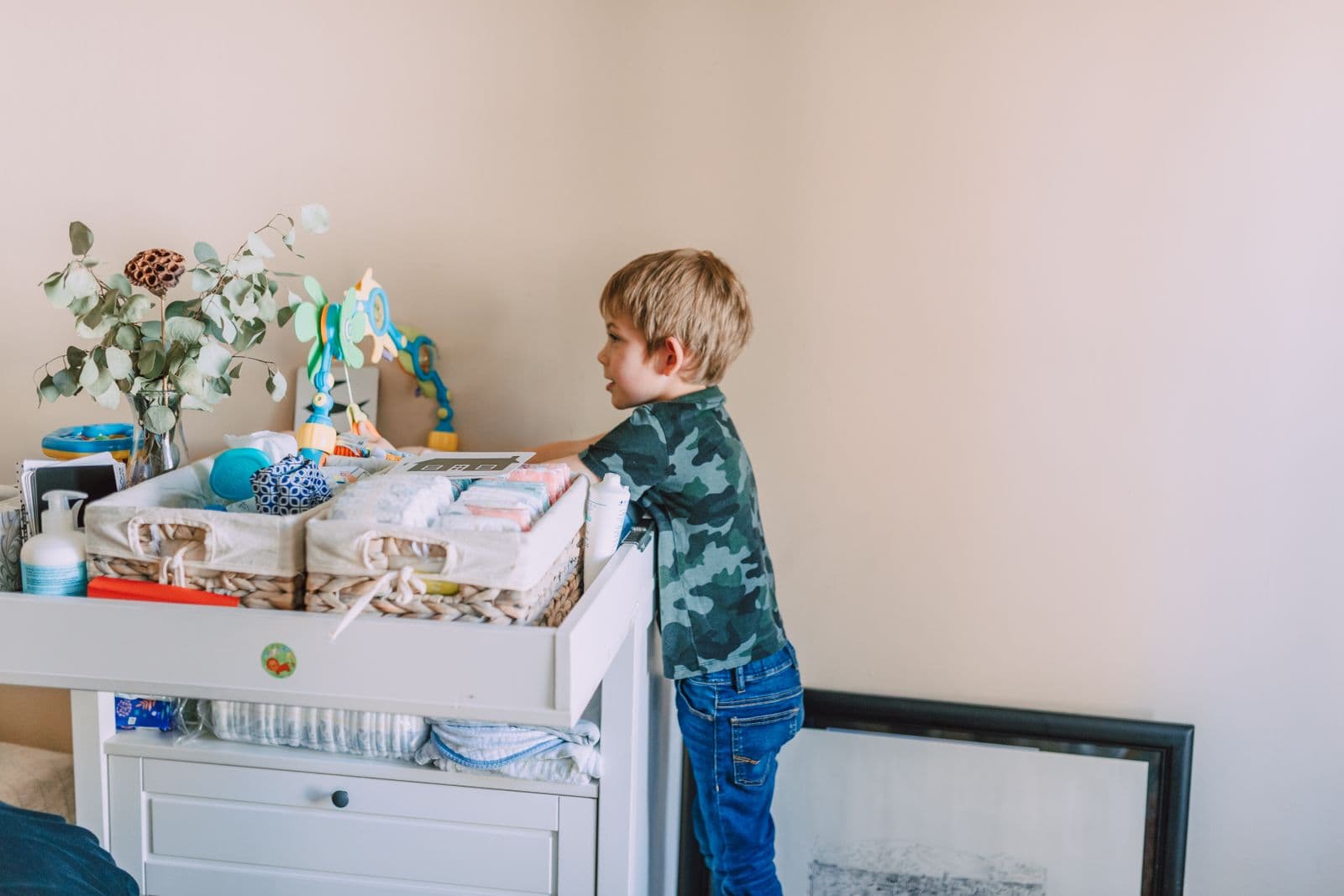
Two details in the CPSC's safety material explain why a nursery is where this lands. First, strangulation on a cord "can happen in mere moments, even with an adult nearby," and it is often silent, so a parent in the same room may not notice. Second, a crib is a piece of furniture a child stands up in, holds onto, and leans over. Put one under a window and every cord within an arm's length of the rail is in play.
That is why the first thing the CPSC tells you to do is not about blinds at all. It is to move cribs, beds, furniture and toys away from windows and window covering cords, preferably to another wall.
The two kinds of blind, and the two sets of rules
The industry divides window coverings into stock and custom. A stock product is completely or substantially fabricated before it reaches the shop, with its own SKU. Cutting it to width in the store, attaching a rail or tying off a cord does not change that, and neither does buying it online. A custom product is anything that is not stock: made to your dimensions, fabric, control type and mounting. Custom products are not a niche. The D.C. Circuit's 2023 opinion records that they account for 44% of unit sales, with prices that can reach $5,000 for a single covering.
Stock blinds: cordless or short-corded since December 2018
The voluntary standard, ANSI/WCMA A100.1, was revised in 2018 and took effect on 15 December 2018. For stock products it requires one of three things: no operating cord at all, cords that cannot be reached, or a short cord of eight inches or less in any position of the blind.
That standard became enforceable at the federal level in November 2022, when the CPSC added non-compliant window covering cords to its substantial product hazard list. The rule now sits at 16 CFR 1120.3. It says a stock window covering that fails the 2018 standard's operating cord requirements, its inner cord requirements, or its on-product label requirement is deemed a substantial product hazard. In plain terms: a new stock blind with a long dangling pull cord is not merely poor practice. It is a product the CPSC can pursue.
Custom blinds: the gap, the rule, and the court
The 2018 standard did not apply its operating cord requirements to custom products. It set a default cord length and a default tilt wand in place of a tilt cord for corded custom orders, and it strengthened the warning tags, but custom blinds could still ship with operating cords.
The federal substantial hazard rule mirrors that split. For custom window coverings, 16 CFR 1120.3 reaches the inner cord and label requirements only. The operating cords were left to a separate rule.
That separate rule was 16 CFR Part 1260, the Safety Standard for Operating Cords on Custom Window Coverings, published on 28 November 2022 with an effective date of 30 May 2023. It would have held custom operating cords to the same requirements as stock ones. The Window Covering Manufacturers Association challenged it, and on 12 September 2023 the U.S. Court of Appeals for the D.C. Circuit granted the petition and vacated the rule. The court found that the Commission had breached notice-and-comment requirements, relied on flawed data in its cost-benefit analysis, and picked an arbitrary effective date. It sent the matter back to the CPSC.
One trap for anyone reading the regulation online: the text of Part 1260 still appears in the electronic Code of Federal Regulations, with its May 2023 effective date. The court's decision is what governs it, not the fact that the page still exists.
What filled the gap: ANSI/WCMA A100.1-2022
The industry's own revision, ANSI/WCMA A100.1-2022, was approved in August 2022, published by ANSI in December 2022, and applies to products manufactured on or after 1 June 2024. For custom products it:
- eliminates free-hanging operating cords, free-hanging tilt cords, and multiple cords gathered into one cord connector,
- prohibits continuous cord loops and bead chains on horizontal slatted custom products,
- permits three corded systems, each with added performance requirements: retractable cord systems, rigid cord shrouds, and continuous cord loops with enhanced tension devices.
Stock products continue to require cordless operation or inaccessible cords.
So a custom blind ordered today should not arrive with a loose cord hanging from it. A custom blind ordered in 2023 may well have one, and nothing in federal law obliged it not to.
What the standard does not reach
A standard applies to the product at the date it was made. It does nothing to the blind that was already on the wall, and that is where most of the remaining risk lives.
- Anything made before December 2018 may have a long, looped or tasselled pull cord, whatever kind of blind it is.
- Custom products made before June 2024 may have free-hanging operating cords or continuous loops.
- Blinds sold before November 2000 are the worst case. The CPSC notes that most of them have inner cords, the ones that run through the slats to raise them, which a child can pull out to form a loop large enough to catch a neck. The agency's advice for these is to replace them immediately.
- Corded draperies carry the same hazard. The CPSC's recommendations name draperies alongside blinds and shades.
A standard also does not cover how a blind is installed. A continuous-loop cord that the 2022 standard permits does its job only while its tension device is fixed to the wall and holding the loop taut. The CPSC's own steps assume you will do that anchoring.
How to tell what you have
Start at the window and work through it in this order.
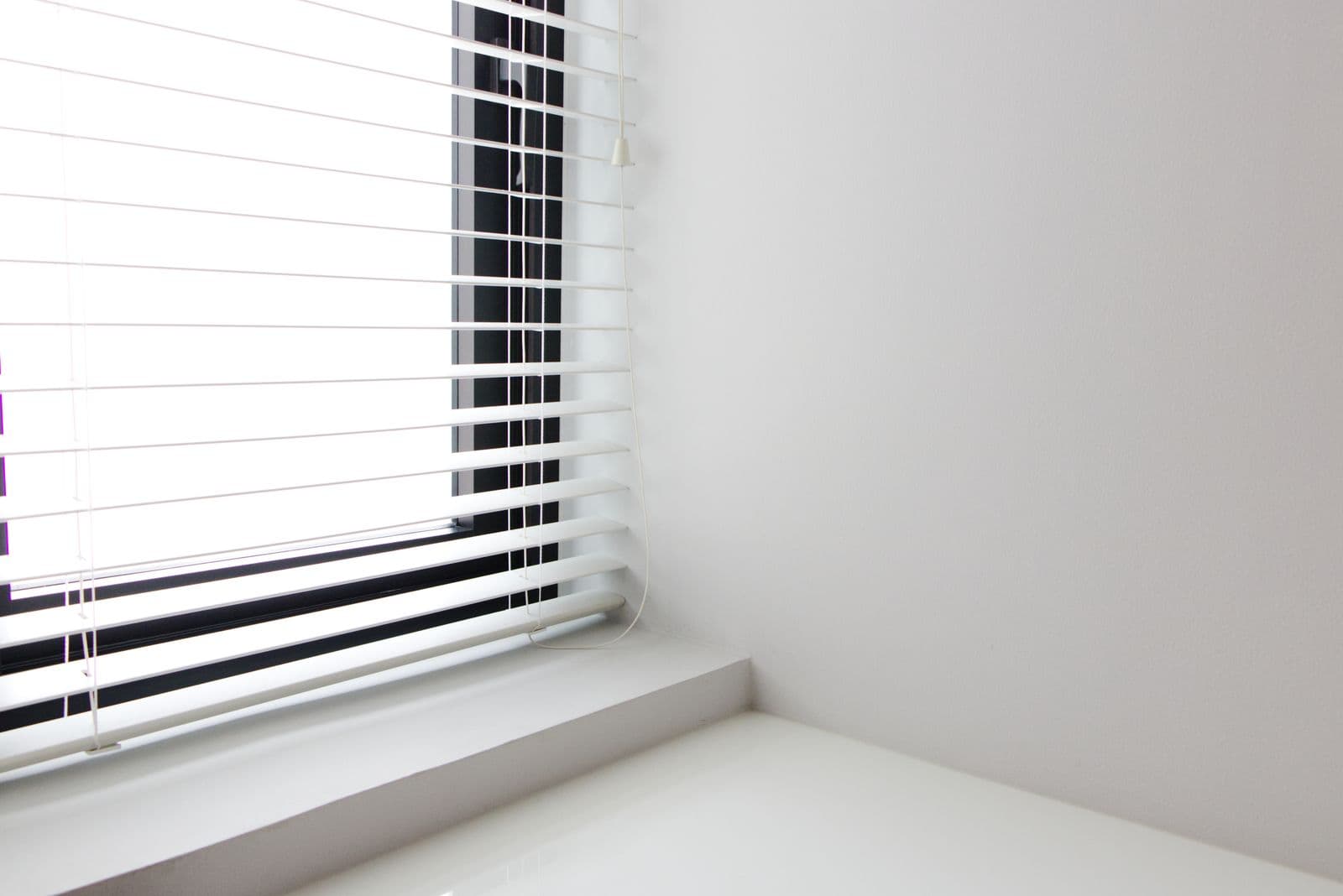
- Look for any cord at all. If raising and lowering the blind involves pulling a cord, loop or bead chain, it is corded. Pushing the bottom rail up by hand, a motor, or a solid plastic wand means the operating system is cordless or close to it.
- Measure what hangs down. With the blind fully lowered and fully raised, the operating cord on a compliant stock product is either unreachable or no longer than eight inches. A cord that pools on the sill fails that test.
- Check the inner cords. On a slatted blind, pull gently on the cord threaded through the slats. If it lifts out into a loop, you have the pre-2000 hazard.
- Read the label. The 2018 standard requires an on-product manufacturer label, and the federal hazard rule enforces it for stock and custom products alike. Keep it on the blind, because it identifies the maker if a recall is announced.
- Look for the "Best for Kids" mark. This is an industry certification, launched by the WCMA in 2015, that requires third-party testing by Bureau Veritas or Intertek. Products that qualify have no cords, or have no operating cords and inaccessible inner cords, or have accessible inner cords that cannot form a hazardous loop. It is the quickest way to identify a cordless product in a shop.
A word on that last label. When it launched, a coalition including the Consumer Federation of America, Consumers Union and Kids in Danger criticised the program for continuing to let "safe corded" products sit alongside it. The criticism was about what the program left unlabelled, not about the certified products themselves. For a nursery, the label does exactly the job you need: it identifies the cordless option.
If you cannot replace the blinds yet
Renters and anyone waiting on a custom order are in this position constantly. The CPSC's steps below reduce the hazard. In the agency's words, they do not eliminate it.
- Move the crib first. Away from the window and any cord, preferably to another wall. Do the same for a bed, a glider, a toy box or anything else a child can climb onto to reach the window.
- Shorten dangling pull cords as far as they go, and keep every cord out of a child's reach.
- Set the cord stops. These are the small doughnut-shaped fittings on each pull cord. They limit how far the inner lift cords can be pulled out, and should sit within one to two inches of the head rail when the blind is fully lowered.
- Anchor continuous loops. Fix the loop to the floor or wall with a tension device, using a fastener suited to the surface, so the cord stays taut but still works.
- Get the free kit. The Window Covering Safety Council offers free retrofit kits with cord stops and tension devices, at 800-506-4636 or windowcoverings.org.
Know what the kit does not fix. The CPSC points out that the retrofit kits do not address the dangling pull cord on many common blinds. A cleat on the wall, with the cord wound around it every time, is a habit rather than a safeguard, and habits lapse at bedtime.
Buying new: what to specify
Buying cordless is not the expensive route it once was. The CPSC describes cordless blinds, shades and draperies as affordable and widely available at most retailers, and the 2018 standard means every stock blind made since then should be cordless, short-corded or built with inaccessible cords. When you buy online, look for products described as cordless.
For a nursery, three specifications do most of the work:
- Cordless lift or motorised. A push-up bottom rail or a motor removes the operating cord entirely.
- A wand, not a cord, for tilting. On slatted blinds, the tilt mechanism is a separate control. A rigid wand removes it as a hazard.
- A cordless blackout option. If darkness is the reason you are buying, cordless cellular and roller shades exist in blackout fabrics. Our blackout in a nursery guide covers what actually seals a window, and every option in it can be bought without a cord.
For a custom order, ask the fabricator to confirm in writing that the product is made to ANSI/WCMA A100.1-2022 and which of the permitted operating systems it uses. If it is a continuous loop, confirm the tension device is included and fit it on the day.
Where this sits in the nursery
Window cords are one of three cord hazards in a typical nursery. The second is the monitor cable, and baby monitor cord safety and placement covers the three-foot rule. The third is the lamp, sound machine and night-light wiring around the crib. The sound machine guide deals with where those sit.
The furniture you moved away from the window still needs fixing to a wall, and anchoring nursery furniture explains what the federal dresser rule covers and what it leaves to you. If the crib's new spot is near a radiator or a sunny window, nursery temperature and overheating risk is the check to run next.
Questions people actually ask
Are all blinds sold in the US cordless now?
Stock blinds, the kind sold ready-made in shops and online, have had to be cordless, have inaccessible cords, or have cords of eight inches or less since the ANSI/WCMA standard took effect on 15 December 2018, and the CPSC made that enforceable in 2022. Custom blinds made on or after 1 June 2024 fall under a revised industry standard that removes free-hanging cords but still permits some corded systems with safety devices.
Is the federal custom window covering rule in effect?
No. 16 CFR Part 1260 was vacated by the U.S. Court of Appeals for the D.C. Circuit on 12 September 2023 and sent back to the CPSC. Its text still appears in the electronic CFR, which confuses people, but it does not apply. The industry standard ANSI/WCMA A100.1-2022 is what governs custom products made since June 2024.
Are cord stops and tie-downs enough?
They reduce the risk, and the CPSC recommends them when replacement is not possible yet, but the agency is explicit that these steps do not eliminate the hazard. The free retrofit kits do not address the dangling pull cord on many common blinds, and a cord wound onto a wall cleat is safe only while someone remembers to wind it.
How far should a crib be from the window?
The CPSC does not give a distance. It says to move cribs, beds, furniture and toys away from windows and window covering cords, preferably to another wall. The reasoning is reach: a standing toddler can lean over a crib rail and pull on anything within an arm's length.
What does the Best for Kids label mean?
It is an industry certification launched by the Window Covering Manufacturers Association in 2015. Products are tested by Bureau Veritas or Intertek and qualify only if they have no cords, or no operating cords and inaccessible inner cords. It is the quickest way to identify a cordless product on a shelf.
Do curtains have the same problem?
Corded ones can. The CPSC names draperies in its guidance alongside blinds and shades, and tells owners to anchor continuous-loop cords on draperies as well as blinds. A curtain on a plain rod, drawn by hand, has no cord to worry about.
Sources
- CPSC, Window Covering Cords safety education center
- CPSC, nearly half of incidents with kids and corded window coverings resulted in death, 3 October 2022
- CPSC, new federal safety standard for custom window coverings and substantial product hazard rule, 2 November 2022
- CPSC, updated voluntary window covering safety standard takes effect, December 2018
- eCFR, 16 CFR 1120.3, products deemed to be substantial product hazards
- eCFR, 16 CFR Part 1260, Safety Standard for Operating Cords on Custom Window Coverings
- U.S. Court of Appeals for the D.C. Circuit, Window Covering Manufacturers Association v. CPSC, No. 22-1300, 12 September 2023
- Window Covering Safety Council, revised ANSI/WCMA safety standard in effect 1 June 2024
- Window Covering Safety Council, Best for Kids certification
- Consumer Federation of America, statement of consumer safety advocates on the Best for Kids program
- CPSC recall database
As an Amazon Associate we earn from qualifying purchases. We earn a commission on some links, at no extra cost to you. It never changes which products we recommend or the order they appear in. Full disclosure
Who wrote this
Editor, gear and the arithmetic of a small home
Marisa Okonkwo edits BabyGearSearch and writes the hardware half of it: strollers, car seats, carriers and the furniture around them. She reads the specification sheet, the fit list and the returns policy in full before she reads a single review, because the difference between two apparently identical strollers is almost always a number one of them declines to publish.
More from MarisaThe standard
How this guide was built
- Manufacturer specification sheets and warranty terms, read in full rather than summarised from a listing.
- The federal safety standard the product is certified to, plus anything NHTSA, the AAP or the CPSC has published on it.
- Owner reports at volume, including the one-star reviews, which is where failure modes live.
- Every price checked against the live listing on the date printed beside it.